Category: Blog

Your blog category

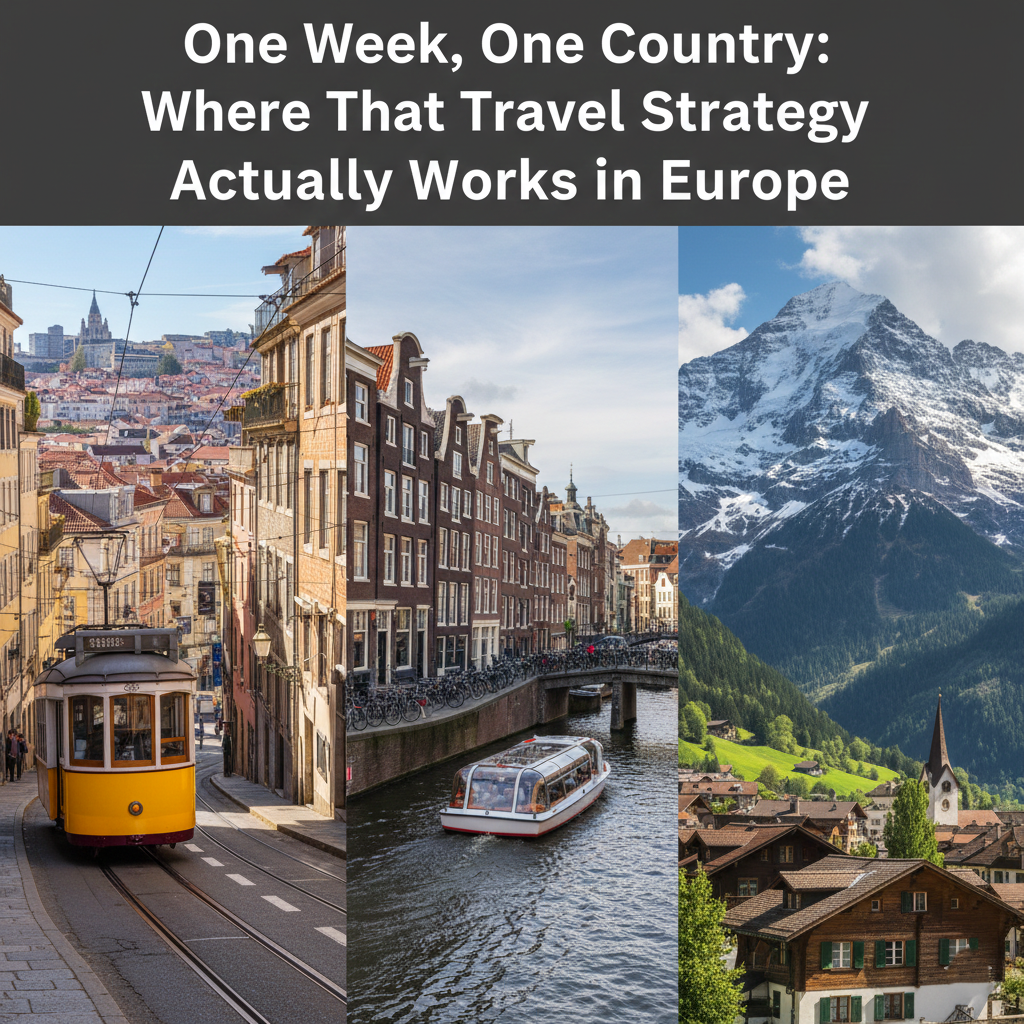
  • One Week, One Country: Where That Travel Strategy Actually Works in Europe

    One Week, One Country: Where That Travel Strategy Actually Works in Europe

    Europe is a continent built for exploration—but there’s a difference between “seeing Europe” and actually enjoying it. Too often, travelers pack multiple countries into a single week, spending more time on trains and in airports than experiencing the destinations themselves.

    If you’ve only got seven days, the smartest Travel strategy is simple: pick one country and explore it well. But which countries actually allow you to feel fulfilled in a week, without leaving regret or exhaustion in your wake? Let’s break it down. read more

  • Emergency Healthcare in Europe: What Happens If You Get Sick Abroad

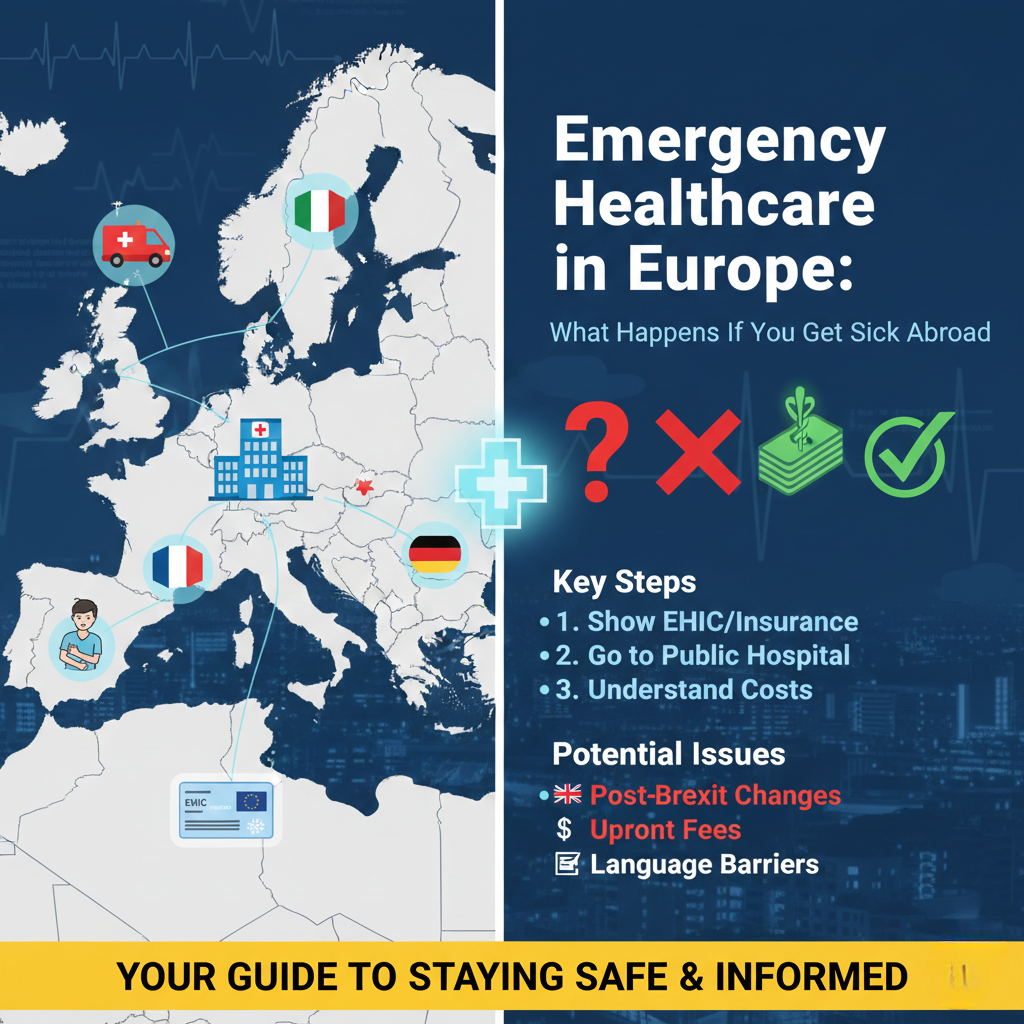
    Emergency Healthcare in Europe: What Happens If You Get Sick Abroad

    Travel is exhilarating. The cobblestone streets of Rome, the fjords of Norway, the nightlife in Berlin — all incredible experiences. But as much as we love to plan, no one plans to get sick abroad.

    What happens if you wake up with a fever in Florence, break your ankle skiing in the Alps, or suddenly realize you’re allergic to every cheese in Switzerland? Europe has emergency healthcare systems that are often efficient, but the rules, costs, and processes vary wildly from country to country. Knowing what to expect isn’t just smart — it can save you money, stress, and sometimes even your trip. read more

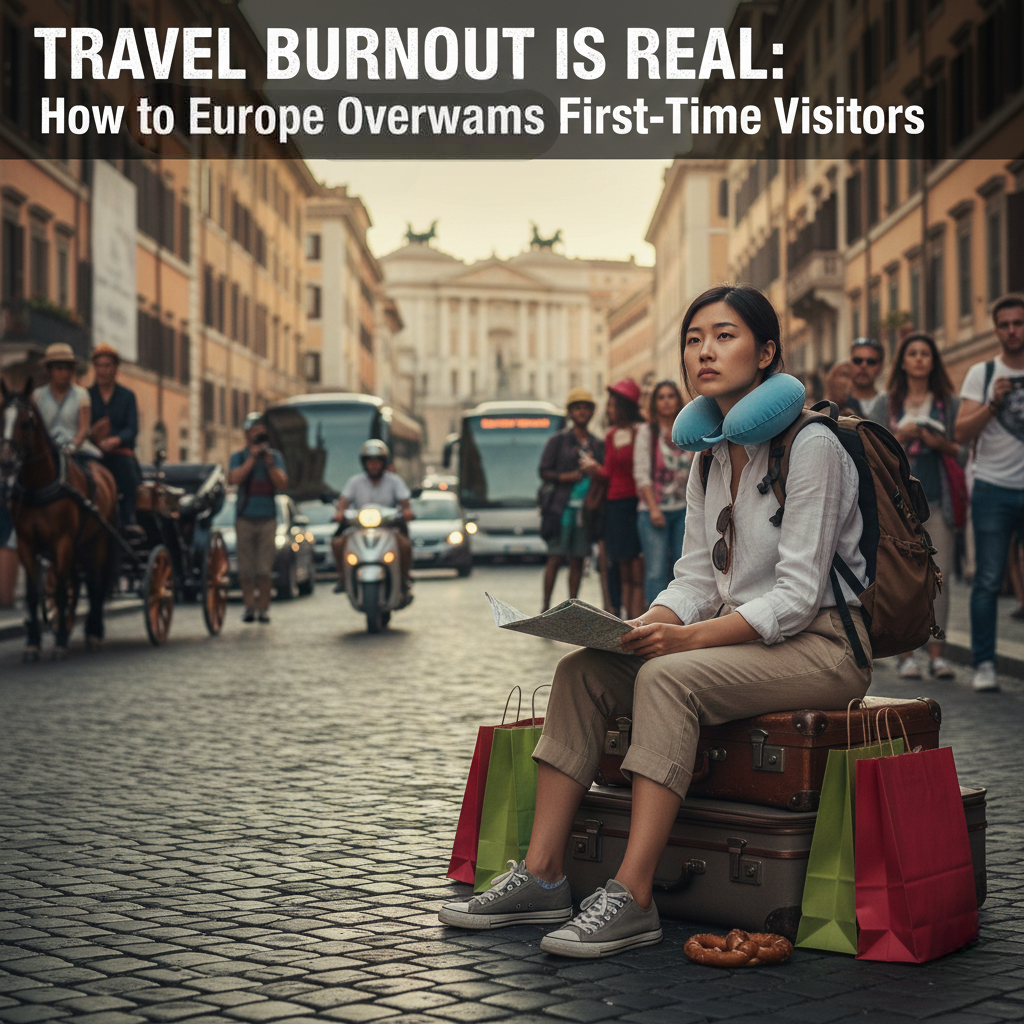
  • Travel Burnout Is Real: How Europe Overwhelms First-Time Visitors

    Travel Burnout Is Real: How Europe Overwhelms First-Time Visitors

    Alright, let’s talk about the thing nobody puts on their Europe itinerary spreadsheet.

    Not pickpockets.
    Not jet lag.
    Not overpriced coffee near landmarks.

    Travel burnout.

    The quiet, creeping exhaustion that turns “I’m in Paris!!!” into “I just want my bed and Wi-Fi.”
    It hits first-time visitors especially hard—and Europe, wonderful and chaotic as it is, is very good at causing it.

    This isn’t a dramatic thinkpiece. It’s a reality check.
    Because Europe doesn’t just overwhelm you with beauty—it overwhelms you with options, expectations, logistics, and pressure to optimize every second. read more

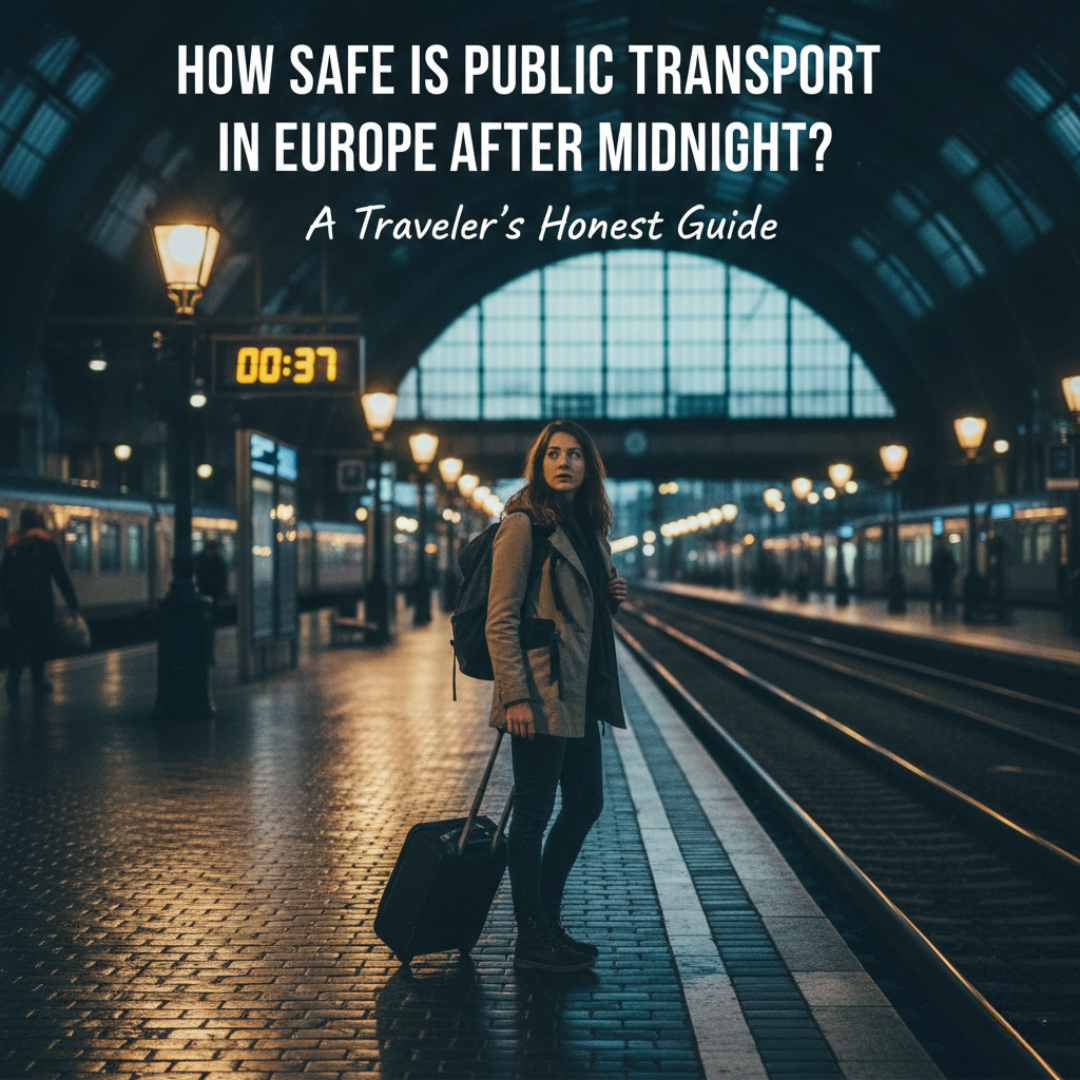
  • How Safe Is Public Transport in Europe After Midnight? A Traveler’s Honest Guide

    How Safe Is Public Transport in Europe After Midnight? A Traveler’s Honest Guide

    Late nights in Europe are magical. The streets glow with amber lights, cafés hum with laughter, and city squares echo with footsteps that seem almost cinematic. But there’s that nagging thought: “Can I actually take the train or metro at this hour without ending up in trouble?”

    Let’s face it—safety concerns on late-night public transport are a common anxiety for travelers. Some cities are perfectly fine; others require planning, vigilance, and sometimes creative thinking. This guide will break down what to expect, country by country, with practical tips so you can ride like a local (and stay safe). read more

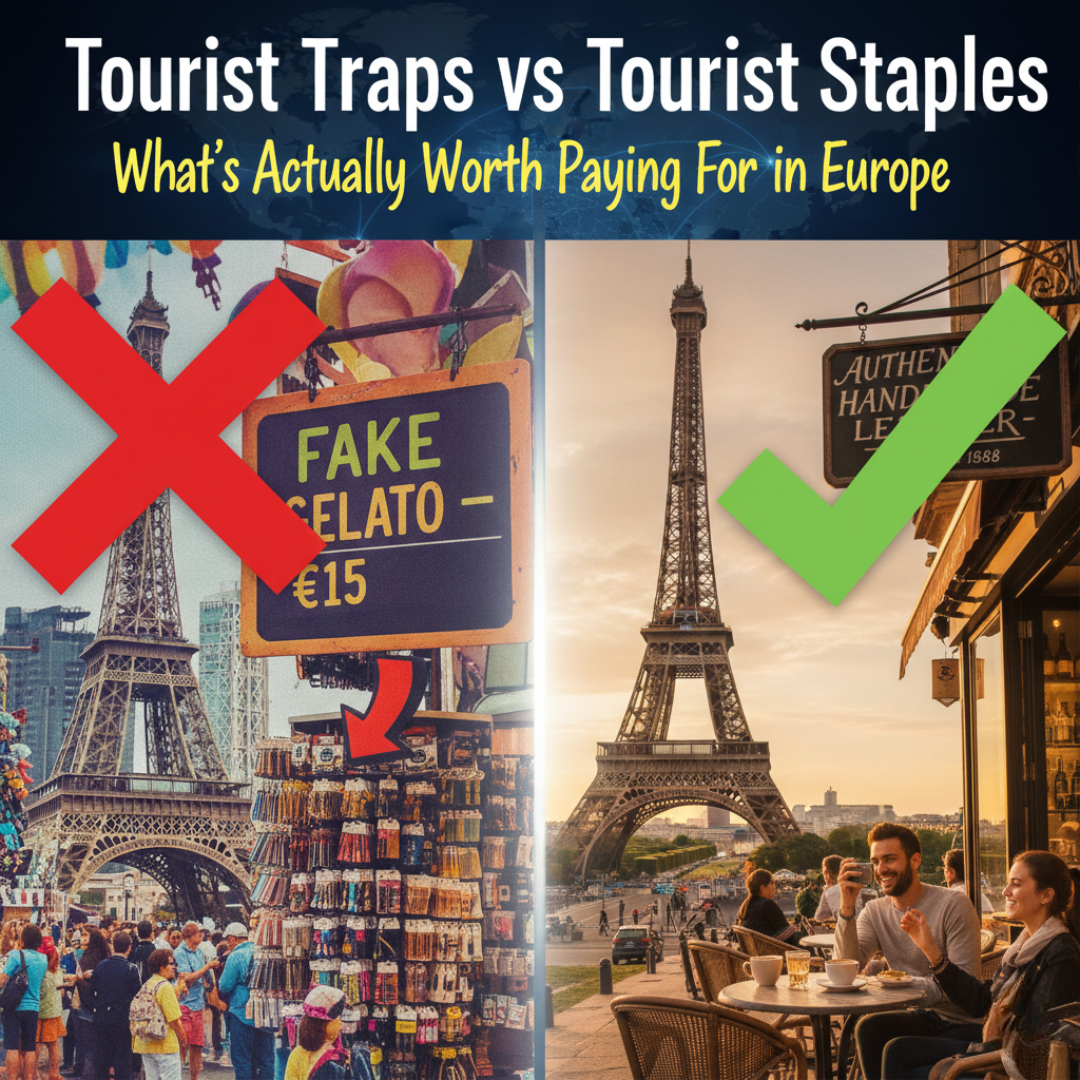
  • Tourist Traps vs Tourist Staples: What’s Actually Worth Paying For in Europe

    Tourist Traps vs Tourist Staples: What’s Actually Worth Paying For in Europe

    Every European tourist trip has that moment.

    You’re standing in a long line, holding an overpriced ticket, wondering:
    “Is this iconic… or am I being gently robbed with ambiance?”

    Europe is full of famous experiences. Some are famous because they’re genuinely incredible. Others are famous because they’ve perfected the art of separating tourists from their money with a smile and a souvenir magnet.

    This isn’t an anti-tourism rant. It’s a reality check.
    Because the goal isn’t to avoid paying for things — it’s to pay for the right things. read more

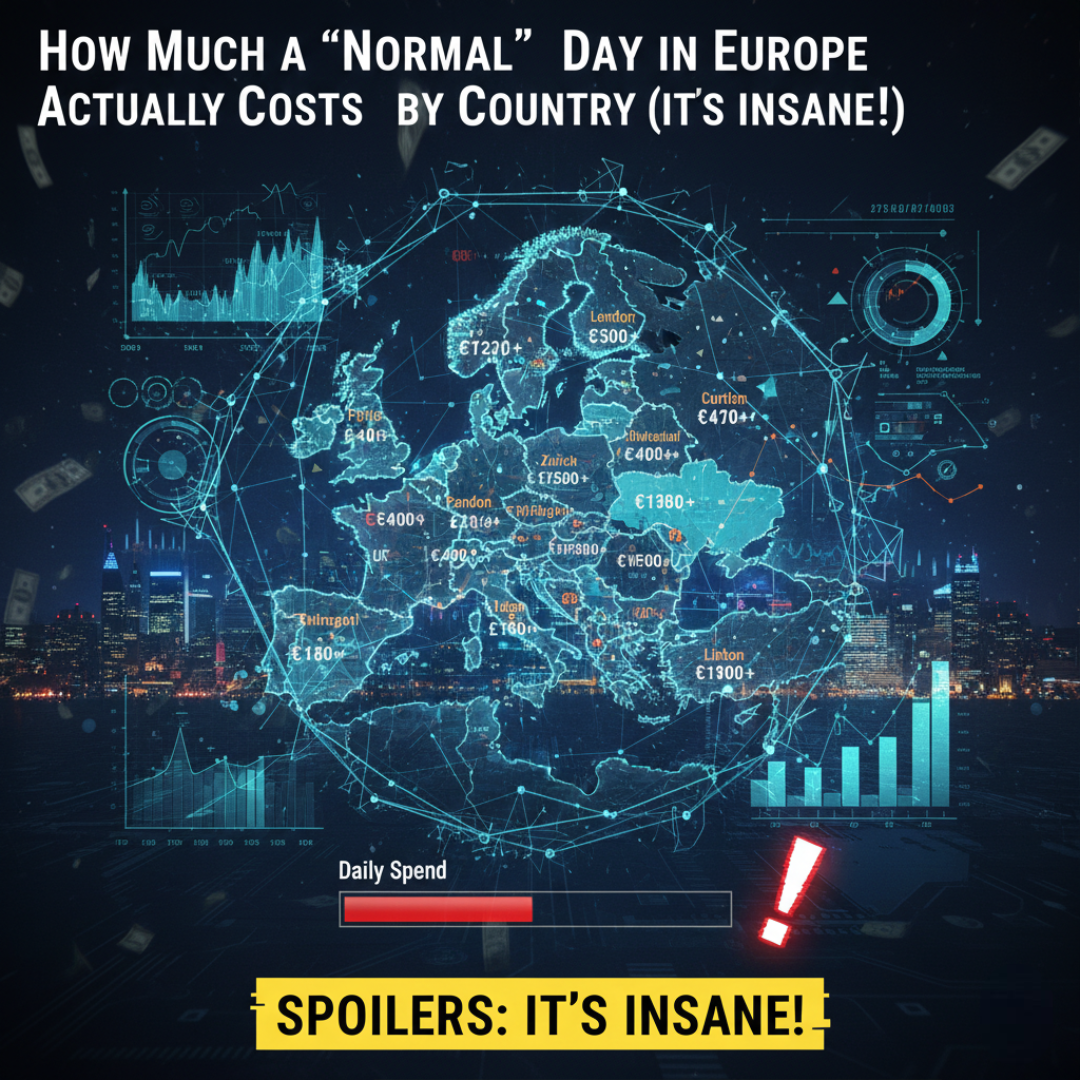
  • How Much a “Normal” Day in Europe Actually Costs by Country (Spoilers: It’s insane!)

    How Much a “Normal” Day in Europe Actually Costs by Country (Spoilers: It’s insane!)

    This is not a “€5 croissant and vibes” fantasy post. This is about what a normal, non-luxury, non-backpacker-masochist day in Europe actually costs in 2026 if you’re traveling like a sane human.

    Not starving.
    Not splurging.
    Just… living a day.

    What Do We Mean by a Normal Day in Europe?

    Before someone in the comments starts yelling, let’s define terms.

    A normal travel day here means:

    • One night in a clean, well-located budget or mid-range hotel
    • Eating three meals (mix of café + casual restaurant)
    • Public transport or walking
    • One paid attraction or experience
    • Coffee. Always coffee.

    No luxury shopping. No private drivers. No sleeping in a train station “for the culture.”

    Western Europe: Where the Wallet Cries Quietly

    🇨🇭 Switzerland — €180–€230/day

    Switzerland doesn’t feel expensive. It is expensive.

    • Hotel: €90–120
    • Food: €45–60
    • Transport: €15–20
    • Attractions: €20–30

    A sandwich can cost €12 and somehow still be emotionally disappointing. The scenery is elite, the trains run like Swiss watches, and your bank app will send concerned notifications. read more
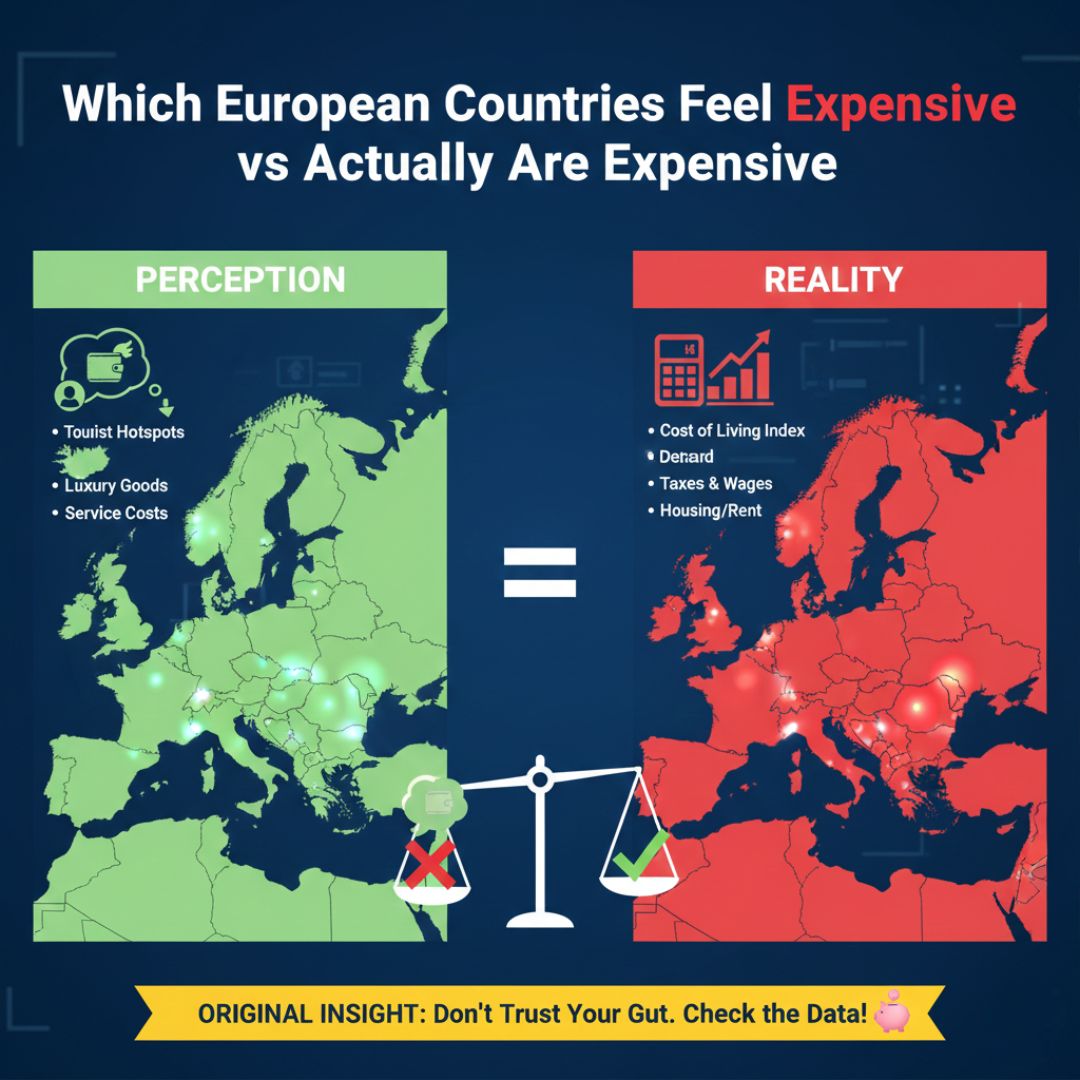
  • Which European Countries Feel Expensive vs Actually Are Expensive

    Which European Countries Feel Expensive vs Actually Are Expensive

    Europe has this psychological pricing trap built into it. You step off the plane in, say, Paris or Zurich, and your brain screams: “We’re broke now!” But sometimes, that panicked feeling isn’t matched by reality. Conversely, you might stroll through Eastern Europe thinking, “Oh, it’s fine!”—until your dinner bill quietly doubles your travel budget.

    Let’s break down the European countries that feel expensive vs the ones that are genuinely expensive, so you can plan smarter, not just cheaper. read more

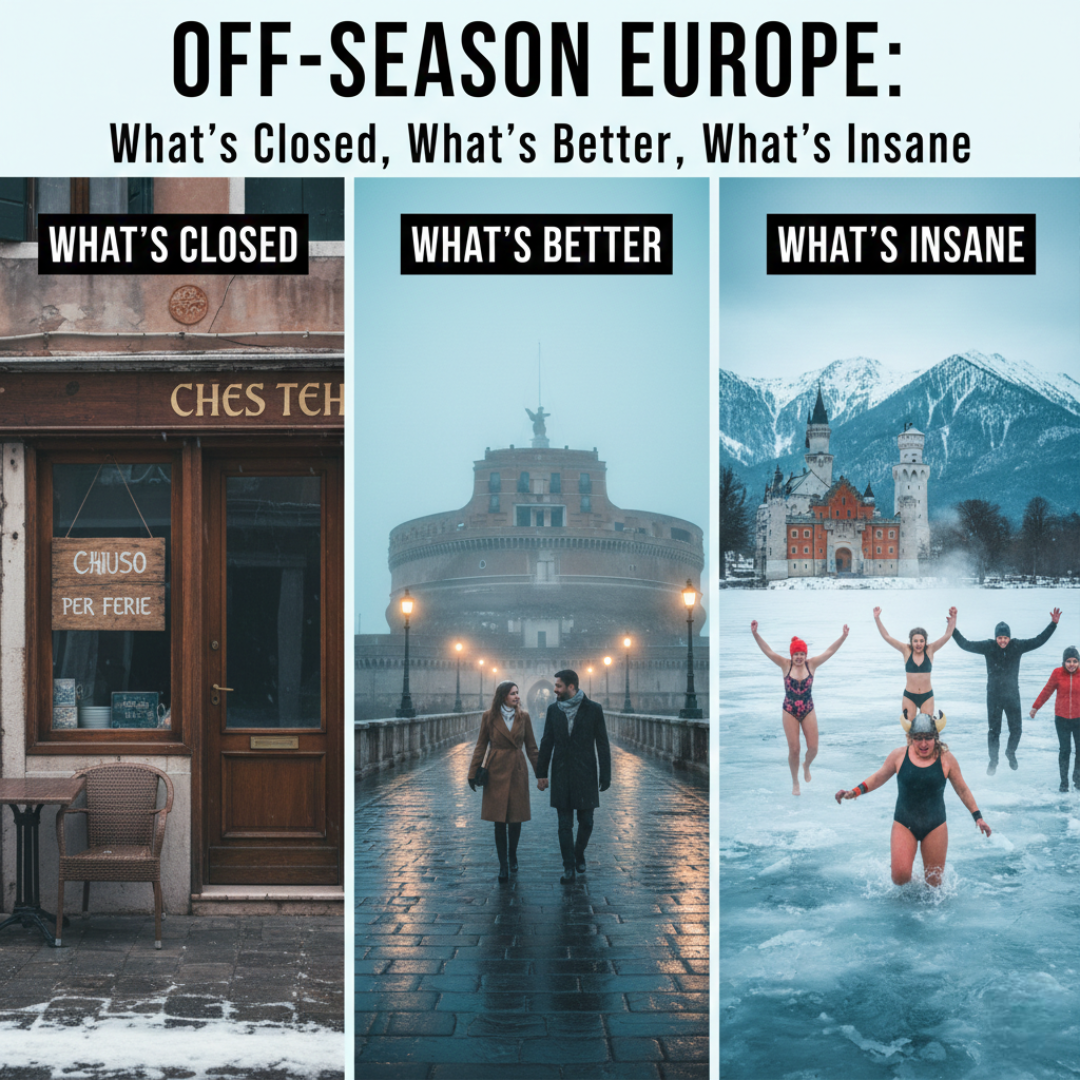
  • Off-Season Europe: What’s Closed, What’s Better, What’s Insane

    Off-Season Europe: What’s Closed, What’s Better, What’s Insane

    Travel blogs love to whisper about off-season Europe like it’s a secret menu item. Cheaper flights. Empty streets. Locals smiling knowingly as you pass by with a croissant and a sense of superiority.

    Reality is messier. Some things absolutely improve. Some things quietly disappear. And some attractions? Turns out they were never that good to begin with.

    Let’s break it down without romantic fog.

    First, What Counts as “Off-Season” in Europe?

    Roughly speaking:

    • November to March (excluding Christmas and New Year)
    • Shoulder months like late October and early April sit in the gray zone

    Northern Europe goes into hibernation earlier. Southern Europe stays half-awake longer. Europe is not a single mood—it’s a patchwork of weather, habits, and cultural patience for tourists. read more

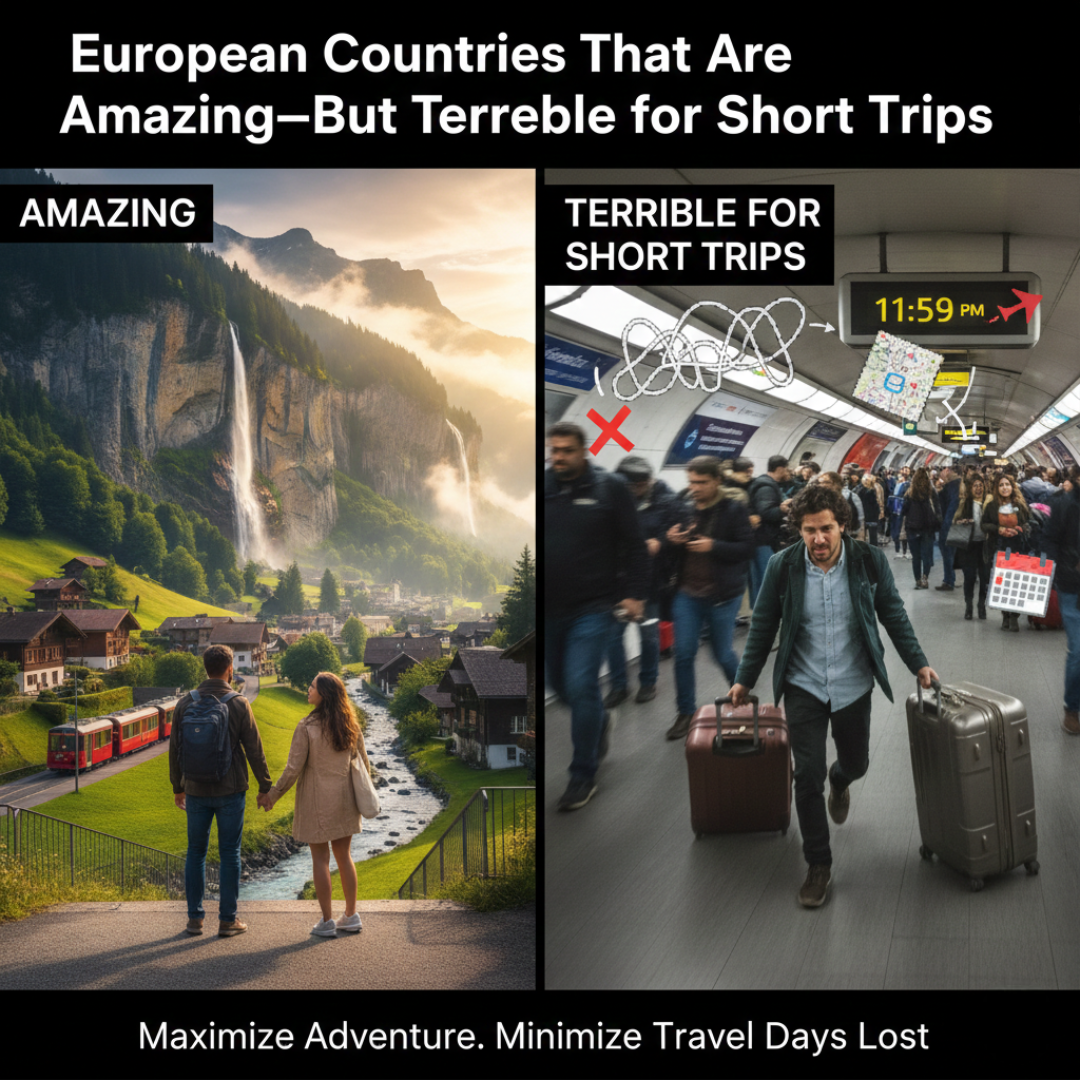
  • European Countries That Are Amazing—But Terrible for Short Trips

    European Countries That Are Amazing—But Terrible for Short Trips

    Alright, let’s take the Instagram filter off European countries for a minute.

    Some countries are absolutely incredible—rich history, unreal landscapes, food that ruins your standards for life—but they are terrible choices for short trips. Not bad. Not boring. Just… not designed for a rushed, three-to-five-day sprint where you’re dragging a suitcase and your sanity behind you.

    This isn’t about gatekeeping destinations. It’s about matching reality to expectations, so you don’t come home saying, “Europe was exhausting” when the real problem was the itinerary. read more

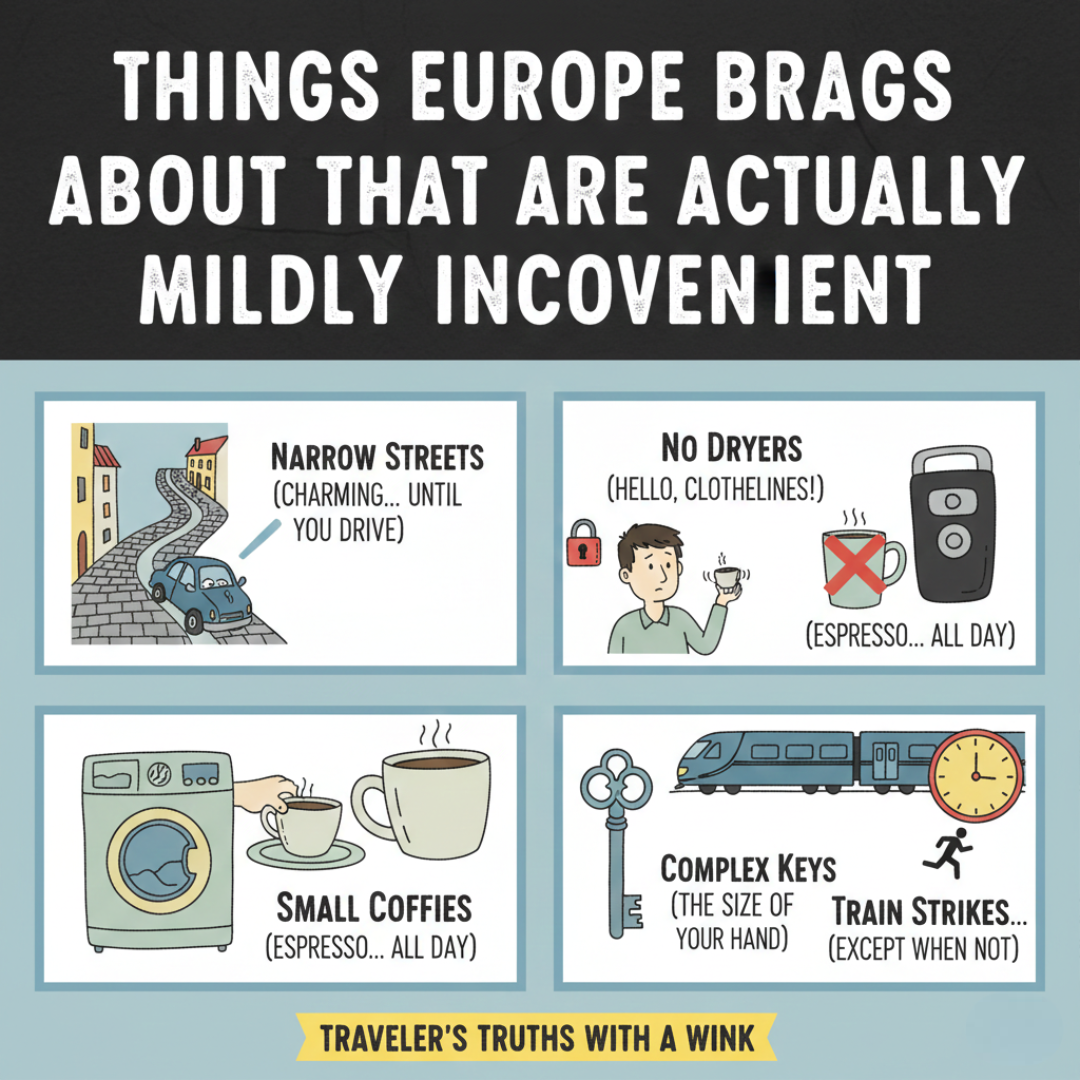
  • Things Europe Brags About That Are Actually Mildly Inconvenient

    Things Europe Brags About That Are Actually Mildly Inconvenient

    Europe is fantastic. It’s beautiful, historic, cultured, walkable, photogenic, and emotionally devastating in the best way. But Europe also brags about certain things the way a friend brags about their “quirky” personality trait that is, in practice, just… mildly annoying.

    This isn’t hate. This is affectionate honesty. Think of it as a travel guide written by someone who packed too light, stood in too many lines, and still had a great time.

    Welcome to Things Europe Brags About That Are Actually Mildly Inconvenient. read more