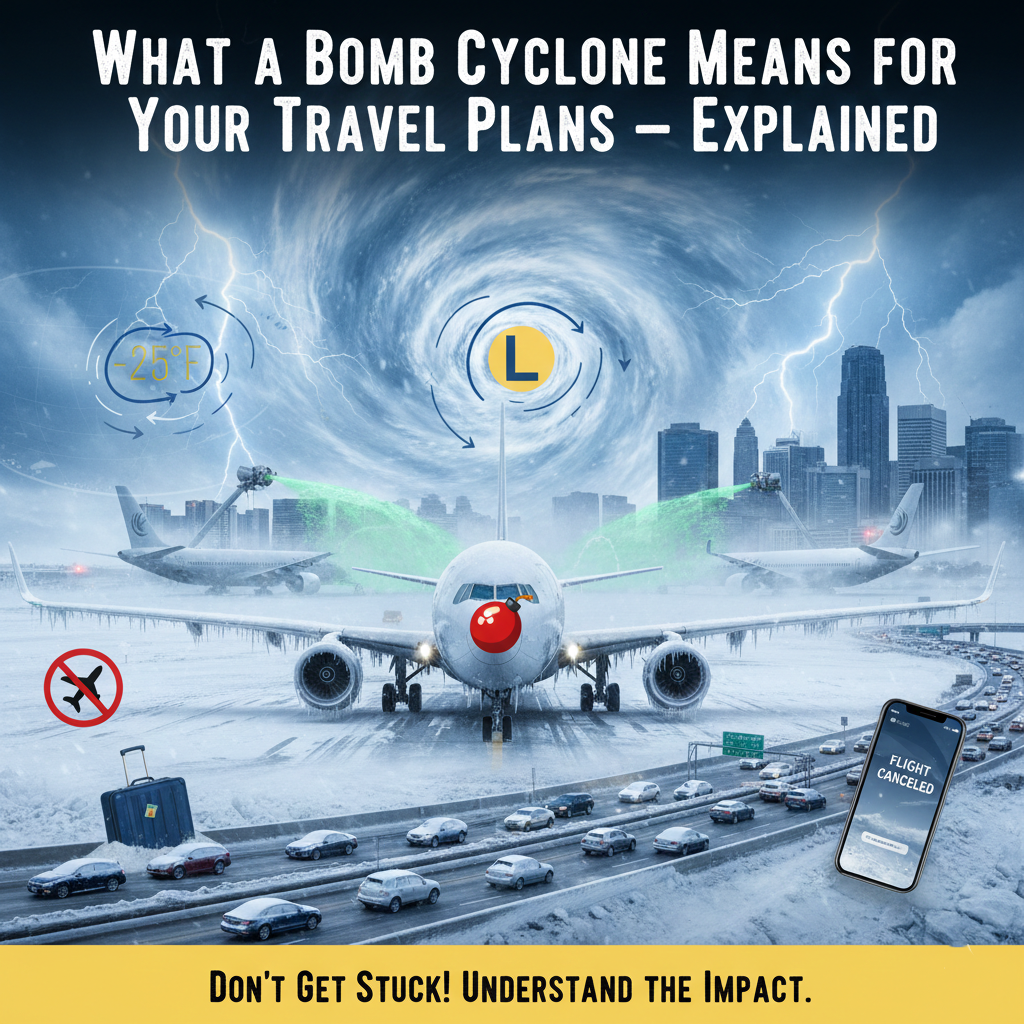
Post-Fern recovery, Gianna prep, and how not to get stranded with a $14 airport sandwich
If you’ve been following U.S. weather news lately, you’ve probably heard the phrase “bomb cyclone” thrown around like it’s the final boss of winter storms. Winter Storm Fern just bulldozed half the continent, and now Winter Storm Gianna is lining up with the kind of meteorological energy that makes airlines quietly update their waiver pages.
Travelers are left asking one simple question:
Is it safe to travel, or am I about to ruin my plans, my wallet, and my sanity?
Let’s decode what a bomb cyclone actually is, why it wreaks havoc on flights and roads, and how to make smart travel decisions while one is forming.
No fear-mongering. No romanticized snowstorm nonsense. Just practical clarity.
First: What Is a Bomb Cyclone (and Why the Name Sounds So Dramatic)
A bomb cyclone—also called bombogenesis—is a storm that intensifies extremely fast.
Here’s the simple version:
- Air pressure drops at least 24 millibars in 24 hours
- That rapid pressure drop supercharges the storm
- Result: violent winds, heavy snow or rain, coastal flooding, and brutal cold
Think of it as a regular winter storm that suddenly hits the gym, drinks three energy drinks, and chooses chaos.
Winter Storm Gianna fits this pattern, especially along the U.S. East Coast, where cold Arctic air collides with warmer Atlantic moisture. That clash is what turns “normal winter weather” into “everything is canceled.”
Why Bomb Cyclones Are a Nightmare for Travel
This is where things get real for travelers.
Bomb cyclones don’t just cause snow. They create multiple overlapping problems that compound fast.
Flights: Why Airports Grind to a Halt
Most people assume snow is the main issue. It’s not.
Airlines cancel flights during bomb cyclones because of:
- Sustained high winds (crosswinds make takeoff and landing unsafe)
- Rapid pressure changes that affect aircraft performance
- Ice accumulation on planes faster than de-icing crews can keep up
- Crew displacement when earlier flights are canceled
Once crews are out of position, cancellations ripple outward—even at airports with decent weather.
That’s how you end up grounded in Chicago because of a storm in New Jersey.
Roads: Why Driving Can Be Worse Than Flying
Bomb cyclones are especially dangerous for road travel because they often create:
- Whiteout conditions
- Flash-freezing after rain turns into ice
- Wind gusts strong enough to push vehicles
- Snow drifts that re-cover plowed roads
After Fern, many regions are still dealing with damaged infrastructure and strained road crews. Gianna hitting the same areas means re-freezing, re-snowing, and slower recovery.
Translation: roads that look “clear” on Google Maps can turn hostile fast.
Trains & Buses: Not the Safe Backup People Think
Amtrak, regional rail, and long-distance buses aren’t immune.
High winds affect overhead lines. Ice messes with switches. Tracks contract in extreme cold. Schedules unravel quietly, then all at once.
Rail disruptions tend to be delayed rather than canceled, which sounds better until you’re stuck waiting six hours for a train that keeps slipping by 30 minutes at a time.
Post-Fern Reality: Why Timing Matters Right Now
Here’s the key mistake travelers make after a major storm:
They assume that once snow stops, travel is “back to normal.”
It isn’t.
After Winter Storm Fern:
- Power grids are still under strain
- Road damage is ongoing in several states
- Airline networks are still rebalancing crews and aircraft
- Hotels in affected regions are dealing with overflow and outages
Now add Gianna into that recovery phase, and you get fragile systems being stressed again.
This is why back-to-back storms are worse than one big storm.
Who Should Absolutely Reconsider Traveling During a Bomb Cyclone
Let’s be blunt.
You should delay or reroute if:
- Your trip involves connecting flights through storm-prone hubs
- You’re traveling for something flexible (leisure, not emergencies)
- You’ll be driving long distances in unfamiliar winter conditions
- Your destination relies on older infrastructure or rural roads
- You’re traveling with kids, elderly companions, or medical needs
This isn’t cowardice. It’s math.
Who Can Still Travel (Carefully)
Travel may still make sense if:
- You’re flying direct through major airports with strong operations
- Your destination has recently cleared infrastructure
- You’ve built buffer days into your itinerary
- Your airline has issued weather waivers
- You’re mentally prepared for delays and backup plans
Bomb cyclones punish tight schedules. Flexible travelers survive just fine.
Airline Waivers: Your Secret Weapon (If You Use Them Correctly)
During storms like Gianna, airlines often issue travel waivers that allow:
- Free date changes
- Route changes
- Credit instead of cancellation fees
The catch?
Waivers apply only during specific windows and often before your flight is canceled.
Smart move:
- Check your airline’s travel advisory page daily
- Rebook early instead of waiting for chaos
- Choose flights after the storm passes, not during the “maybe” phase
Airlines reward proactive passengers. Reactive ones get stuck on hold.
Hotels, Rentals, and the Domino Effect
Storm disruptions don’t stop at transportation.
Hotels may:
- Lose power or water
- Prioritize displaced locals
- Cancel reservations unexpectedly
- Charge higher last-minute rates due to shortages
Short-term rentals may:
- Be inaccessible due to road closures
- Have heating issues
- Be slow to respond during outages
If you’re traveling during or immediately after a bomb cyclone, confirm your lodging the same day you travel. Not the night before. The same day.
How to Stay Safe If You’re Already Traveling
If you’re mid-trip and Gianna is looming:
- Stay put if possible
- Avoid night driving
- Keep devices charged and power banks ready
- Carry snacks and water (airport food runs out faster than you think)
- Screenshot reservations in case systems go down
- Follow official weather alerts, not social media panic
Storms don’t care about vibes. They care about physics.
The Big Takeaway: Bomb Cyclones Are Predictable Chaos
Here’s the strange comfort in all of this:
Bomb cyclones feel dramatic, but they’re well-studied and increasingly well-forecasted.
That means travelers who:
- Watch forecasts
- Use waivers smartly
- Avoid tight itineraries
- Respect post-storm recovery time
…usually come out fine.
The people who suffer most are the ones who assume winter travel “will probably be okay.”
Winter doesn’t do “probably.”
Final Thought: Smart Travel Is Boring—and That’s Good
There’s nothing glamorous about rescheduling a trip, avoiding a storm window, or choosing a less exciting route.
But boring travel decisions save money, time, and sanity.
Winter Storm Fern reminded us how fragile travel systems can be. Winter Storm Gianna is a reminder not to test them while they’re healing.
Travel smart. Travel flexible. Let the storm pass.
Your trip will still be there.
Even if Winter Storm Gianna is keeping travel plans on pause, you don’t have to put your wanderlust completely on hold. Use our Random European Country Generator to pick your next adventure, plan ahead for safer travel windows, and discover destinations that aren’t storm-bound. Who knows—you might find your next favorite city while the snow settles elsewhere!
According to TravelPulse, Winter Storm Gianna has intensified into a powerful bomb cyclone impacting travel across the U.S. East Coast, with heavy snow, winds, and coastal flooding prompting airlines to waive change fees, cancel flights, and warn passengers to expect disruptions as crews work to maintain operations.
Leave a Reply