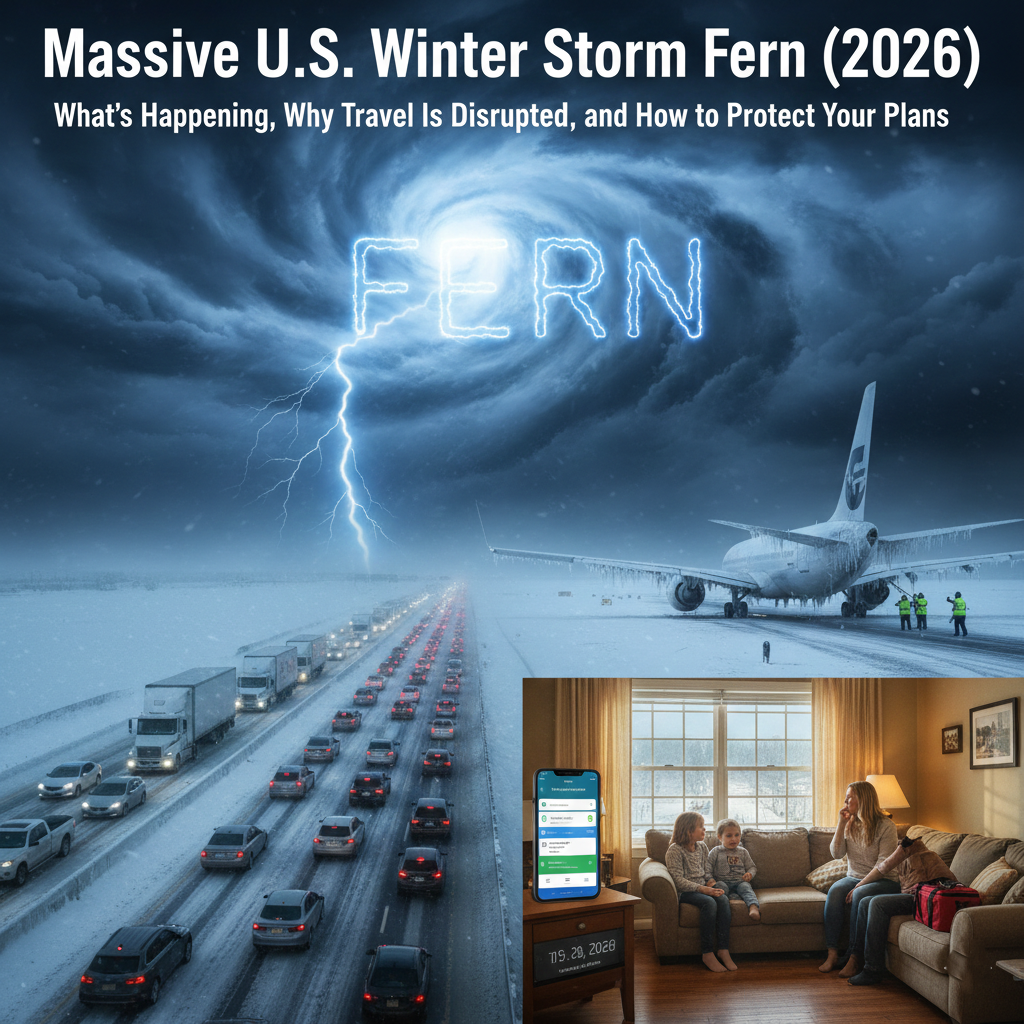
If you’re wondering why flights are vanishing from departure boards, trains are quietly disappearing from schedules, and hotel prices are doing something weird — you’re not imagining it.
Winter Storm Fern isn’t just another snowy inconvenience. It’s a wide-reaching, multi-day winter system that’s hit the U.S. with a nasty combination of snow, ice, power outages, and extreme cold, and it’s disrupting travel in ways that ripple far beyond the storm’s actual footprint.
Let’s break down what’s happening, why travel systems struggle during storms like this, and — most importantly — what travelers can realistically do to protect their money, plans, and sanity.
What Is Winter Storm Fern, Exactly?
Winter Storm Fern is one of the most expansive winter systems of the 2025–2026 season so far.
Instead of dumping snow in one region and moving on, Fern sprawled across more than 30 states, affecting:
- The Deep South (where ice is far more destructive than snow)
- The Midwest (classic heavy snow + wind)
- The Northeast (major airport and rail corridors)
What makes Fern especially disruptive isn’t just snowfall totals — it’s the layered damage:
snow → ice → power outages → extreme cold → recovery delays.
That domino effect is why travel disruption doesn’t end when the snow stops falling.
Why Flights Are Being Canceled (Even Where It’s Not Snowing)
A common frustration right now:
“It’s not even snowing where I am — why is my flight canceled?”
Here’s the behind-the-scenes reality.
Airlines operate as a network
Planes, crews, and gates are constantly moving between cities. When a storm shuts down major hubs (Atlanta, Chicago, New York, Dallas), the effects spread everywhere.
One grounded aircraft in Chicago can cancel a flight in Florida hours later.
Ice is worse than snow
Snow can be plowed. Ice clings to wings, runways, and equipment. De-icing takes time, chemicals, and staff — all of which slow down operations massively.
Crew time limits are non-negotiable
Pilots and flight attendants are legally restricted in how many hours they can work. Storm delays push crews over those limits, which cancels flights even when the plane itself is ready.
Why airlines cancel early
Preemptive cancellations aren’t laziness — they’re damage control. Canceling early lets airlines:
- Rebook passengers faster
- Avoid stranding crews
- Reduce airport chaos
It still feels awful, but it’s often the least bad option.
What Airline Waivers Mean (And How to Use Them Properly)
During Winter Storm Fern, most major airlines issued weather waivers. These sound generous — but only if you know how they work.
What a waiver usually allows
- Free date changes within a specific window
- Route changes to nearby airports
- Fare differences waived (but only under conditions)
What waivers do NOT guarantee
- Automatic refunds
- Free hotel stays
- Rebooking on a different airline
Pro tip that saves money
If your flight is canceled (not just delayed), you are typically entitled to:
- A full refund to your original payment method
OR - Rebooking (even if you don’t take it)
Refunds are often buried in app menus. Don’t accept credits unless you want them.
Trains, Buses, and Why They’re Also Struggling
Rail systems like Amtrak tend to cancel before conditions become dangerous — especially on icy tracks.
Why?
- Ice interferes with switches
- Snow affects signaling
- Emergency braking distances increase
The upside: train operators usually allow no-fee cancellations or open tickets during major weather events. If your train vanished from the schedule, check your email — flexibility is often automatic.
Hotels: The Quietly Complicated Part of Storm Travel
Hotels are where winter storms get sneaky.
If you can’t arrive
Many hotels will waive cancellation fees only if the airline officially canceled your flight. Delays don’t always count.
Always:
- Screenshot cancellation notices
- Call the hotel directly (apps are slower)
- Ask for a weather exception, not a refund demand
If you’re stuck overnight
Hotels near airports often sell out first. Prices spike fast.
Smart moves:
- Ask the airline desk if they’ve contracted emergency rooms
- Search slightly farther from the airport
- Call hotels directly — front desks sometimes override online pricing
Power Outages + Cold = Why Recovery Takes Days
One reason Fern is especially disruptive is widespread power loss in freezing temperatures.
Without power:
- Airports can’t fully operate
- De-icing equipment slows
- Hotels can’t clean rooms
- Staff can’t safely commute
Even after weather improves, infrastructure recovery lags — which is why travel delays often continue 48–72 hours after the storm “ends.”
What Travelers Can Do Right Now (Actionable Stuff)
This is the part most news coverage skips.
Before You Travel
- Check your airline’s waiver page (not just emails)
- Rebook early if you can — inventory disappears fast
- Avoid tight connections through major hubs
If You’re Already Traveling
- Keep essentials in your carry-on (meds, chargers, warm layers)
- Download airline and hotel apps for faster alerts
- Save screenshots of every change
Money Protection Moves
- Use credit cards with trip delay or interruption coverage
- Keep receipts for meals and hotels
- Don’t accept vouchers unless you’re sure you want them
Is It Safe to Travel During Winter Storm Fern?
“Safe” depends on timing and location.
Generally:
- During the storm: avoid non-essential travel
- Immediately after: expect chaos, not danger
- Several days later: systems stabilize, but backlog remains
The real risk isn’t flying — it’s getting stranded without power, heat, or accommodation in unfamiliar cities.
Why Storms Like Fern Matter for Travelers Long-Term
Winter Storm Fern is a reminder of something uncomfortable but important:
Modern travel is efficient — not resilient.
When everything runs smoothly, it’s amazing. When weather hits multiple regions at once, the system bends hard.
Understanding how disruptions work helps travelers:
- Panic less
- Spend less
- Recover faster
That’s not optimism — it’s preparedness.
Final Thoughts: Travel Isn’t Broken, But It Is Weather-Fragile
Winter Storm Fern isn’t the apocalypse.
It’s also not “just some snow.”
It’s a layered weather event that exposed how tightly connected travel systems are — and how quickly plans can unravel when cold, ice, and infrastructure collide.
The smartest travelers right now aren’t the ones pushing through at all costs.
They’re the ones adjusting early, knowing their rights, and staying flexible.
And honestly? That mindset works long after the snow melts.
The storm has caused extensive travel disruptions and economic impacts — including over 9,000 flight cancellations — while airlines work to recover operations disrupted by Winter Storm Fern.
To Further know and Learn, on how this could disrupt your travelling plans: Check Here!
Leave a Reply