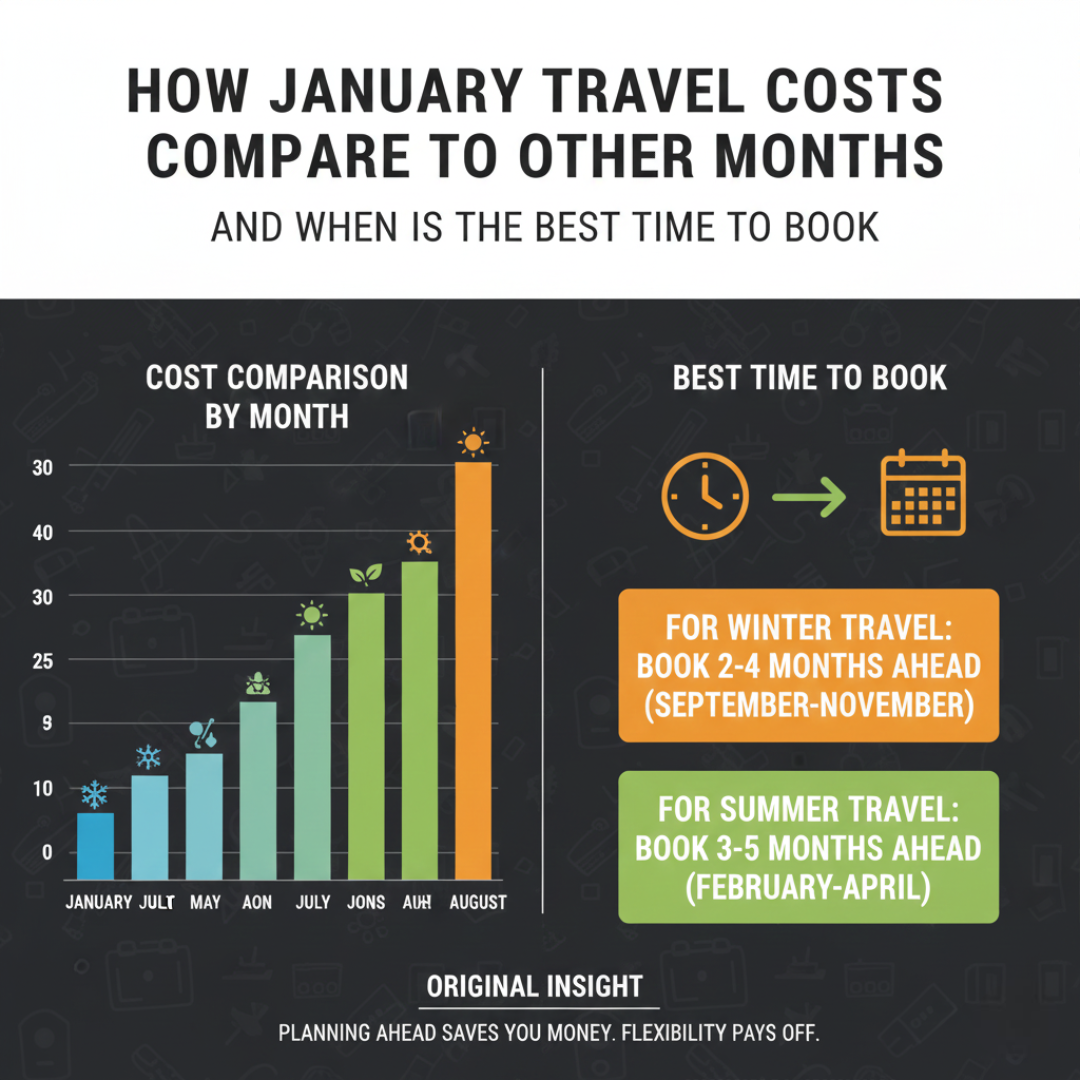
January gets a reputation as the bargain month of travel — a quiet reset after the holiday circus, when flights seem cheaper, hotels empty, and wanderlust is at peak New Year, new me energy.
But is January Travel really cheaper? Or is that just a rumor passed around like a travel meme? The short answer: it depends on where you go, when you book, and what you’re comparing it to. Let’s break this down in a way that’ll help you plan smarter, not wishful-think harder.
January Costs: The Big Picture
The usual myth is that January is the cheapest month of the year to fly and stay anywhere. That used to be true in many markets, and in many cases still is — but with complex price patterns and pricing strategies that airlines and hotels use to maximize revenue, things are not always straightforward.
According to seasonal data:
- Flights in January and early (off-peak) seasons tend to be significantly cheaper than holiday peaks like Christmas and summer. Travel data shows that during December holidays, flights can be up to 45% more expensive than off-peak months.
- Many routes see big January discount trends because demand drops right after New Year’s.
A general industry snapshot comparing average monthly travel costs shows typical patterns like this:
- January flights often average lower than spring and summer months.
- Hotel prices in January are generally lower than peak tourist seasons (like May–August), though they can still be inflated near New Year’s Eve if you mis-time it.
Here’s how that breaks down roughly (using a pricing snapshot from aggregated historical pricing):
| Time of Year | Avg Flight Price | Avg Hotel Price |
|---|---|---|
| January | ~$500 | ~$150 |
| February | ~$550 | ~$175 |
| March | ~$600 | ~$200 |
| Summer | ~$650–780 | ~$200–250 |
| Autumn | ~$500–550 | ~$150–175 |
| December (holiday) | ~$500 | ~$150 |
(*Note: December can be deceptively costly because of demand spikes around holidays rather than the average data being high.)
So January generally leans cheaper — but this isn’t universal, and it really depends on travel windows and booking timing.
Flights: When and How January Wins
Why January Flights Can Be Cheaper
Travel demand goes down sharply after the Christmas/New Year surge. Airlines are left with seats to fill, so they drop prices — especially outside the first week of January. This isn’t just anecdote; guides like Kiplinger argue that January and February are among the cheapest months for flights because of lower demand.
However, if you compare versus the holiday rush, sure — prices fall. But if you compare to February–March business travel peaks or mid-week deals in shoulder seasons, savings can be smaller than people expect.
Optimal Booking Window for January Flights
There’s no magic hour, but pricing experts and travel analysts generally agree that:
- Booking 2–6 months in advance for international travel often gets better fares than last-minute hustle.
- For domestic or short flights, 1–3 months ahead can balance price and flexibility. bestplaceagency
- Days like mid-week purchases (Tuesday/Wednesday) and mid-week travel often have the lowest rates.
Studies tracking dozens of routes show that booking far ahead can save 15–25% compared to waiting until the last minute — but only when done strategically and with flexible dates.
So Should You Book January Flights in January?
Not usually.
If your trip is within a few weeks of January, then booking sooner rather than later helps avoid prices rising as seats fill up. But if you’re planning a January trip months out, booking in the fall (September–November) often yields better prices than booking in December or January itself (especially for popular routes).
Additionally, travel sales in early January — like airline winter sales — do exist and can offer real deals, especially for travel months out beyond spring.
Hotels: January Is Not Always Cheaper (Here’s Why)
Hotels follow a slightly different pattern.
In many destinations, especially in Europe, romantic winter months don’t always mean low hotel prices everywhere — some cities use dynamic pricing that keeps rates flat or even slightly higher, based on events and occupancy. Data shows that average daily rates in many European markets rose moderately in recent years, especially in Northern and Western Europe.
But in general:
- Late January is cheaper than early January because demand drops sharply after New Year’s parties wrap up.
- Popular winter cities (like ski hotspots or New Year’s destinations) can still keep rates high if they’re in peak winter or holiday mode.
- Off-season cities (like Eastern Europe) often have much lower rates in January compared to summer.
The bottom line:
January hotel pricing is more variable than flight pricing — it depends heavily on destination and local demand rather than just the calendar.
Best Hotel Booking Windows for January Travel
According to booking data from travel research:
- For international travel during peak or event periods, 2–4 months ahead tends to yield the best combination of price and availability.
- Local mid-week bookings can be cheaper than weekend check-ins.
- Some travelers report saving money by booking early with free cancellation and then re-booking if prices drop closer to the date — a decent strategy in January’s dynamic pricing environment.
Attractions and Activities: The Hidden Cost Factor
Flights and hotels are the big headline numbers, but don’t forget what you do once you’re there.
Attractions in many cities (like museums, tours, and experiences) often have static pricing year-round, but booking ahead can still save stress and money due to:
- Sold-out time slots pushing you into pricier premium tickets
- Resale sites inflating prices at peak times
- Some major attractions only selling limited tickets early
General travel planning guides recommend reserving famous attractions at least 2 weeks in advance — sometimes much earlier for popular slots.
In January, crowds are smaller, which means flexible walk-up tickets can be cheaper — but this varies widely by activity and city.
Comparing January With Other Months: The Reality Check
January vs Summer
Summer (June–August) is peak season for most of the Northern Hemisphere, especially in Europe and North America. Expect:
- Flight prices up 20–40%
- Hotel rates significantly higher
- Attraction tickets in high demand
January, by contrast, usually delivers consistently lower flights and hotels (off-peak), but gains less dramatic drops than shoulder months like November or August.
January vs Shoulder Seasons (April/May, October)
Shoulder seasons often have:
- Moderate weather
- Lower prices than summer
- Smaller crowds than peak months
Sometimes January airfare and accommodation might be similar to shoulder months — but the experience (weather, daylight, activities) differs significantly.
January vs February/March
Late winter can be slightly pricier than January for domestic routes — especially near local events or spring break build-ups. Flights often rebound slightly in February/March as demand starts rising again.
When To Book for the Best January Travel Deals
Here’s a real booking roadmap:
Flights
- 6–8 months ahead: Ideal for popular or long-haul routes
- 3–5 months ahead: Good for most international trips
- 1–3 months ahead: Often best for domestic and short European hops
- Best days to search: Mid-week, especially Tues–Wed
- Tip: Use price alerts to catch drops; flexible dates are money.
Hotels
- 2–4 months ahead: Safety and pricing balance
- Free cancellation: Book early + re-evaluate closer to travel
- Mid-week stays: Often cheaper than weekend check-ins
- Tip: Explore off-center neighborhoods with similar amenities at lower prices.
Attractions
- 1–4 weeks ahead: Basic reservations
- Months ahead: For must-see timed entries (popular museums, tours)
- Tip: Check official sites first — resale marketplaces can be pricey.
Is January Really the Cheapest Month? The Truth
Mostly yes for flights, especially if compared to peak summer or holiday week pricing.
Sort of for hotels, but that varies a lot by city and demand.
Often for attractions, but only if you book smart and early for big names.
So January can be one of the most cost-effective months to travel… if you know how to play the pricing game.
Savvy booking beats blind optimism, and sometimes a few months of lead time saves hundreds — or even thousands — on your total travel bill.
So Should You Travel in January 2026?
If cost savings are a priority and weather isn’t your sole driver, January can be one of the best months to travel — especially if you strategize the booking window.
It’s not a simple “January = always cheap” formula, but when planned well, it absolutely can beat other months in value, comfort, and low crowds.
And the best way to start is not by hoping prices fall — but by knowing when and how to catch the deals that do.
If decision fatigue is creeping in, letting randomness choose can be oddly freeing. Our random European country generator exists for exactly that moment—when planning becomes heavier than excitement.
January trips don’t need perfection.
They need warmth, patience, and very good socks.
Leave a Reply