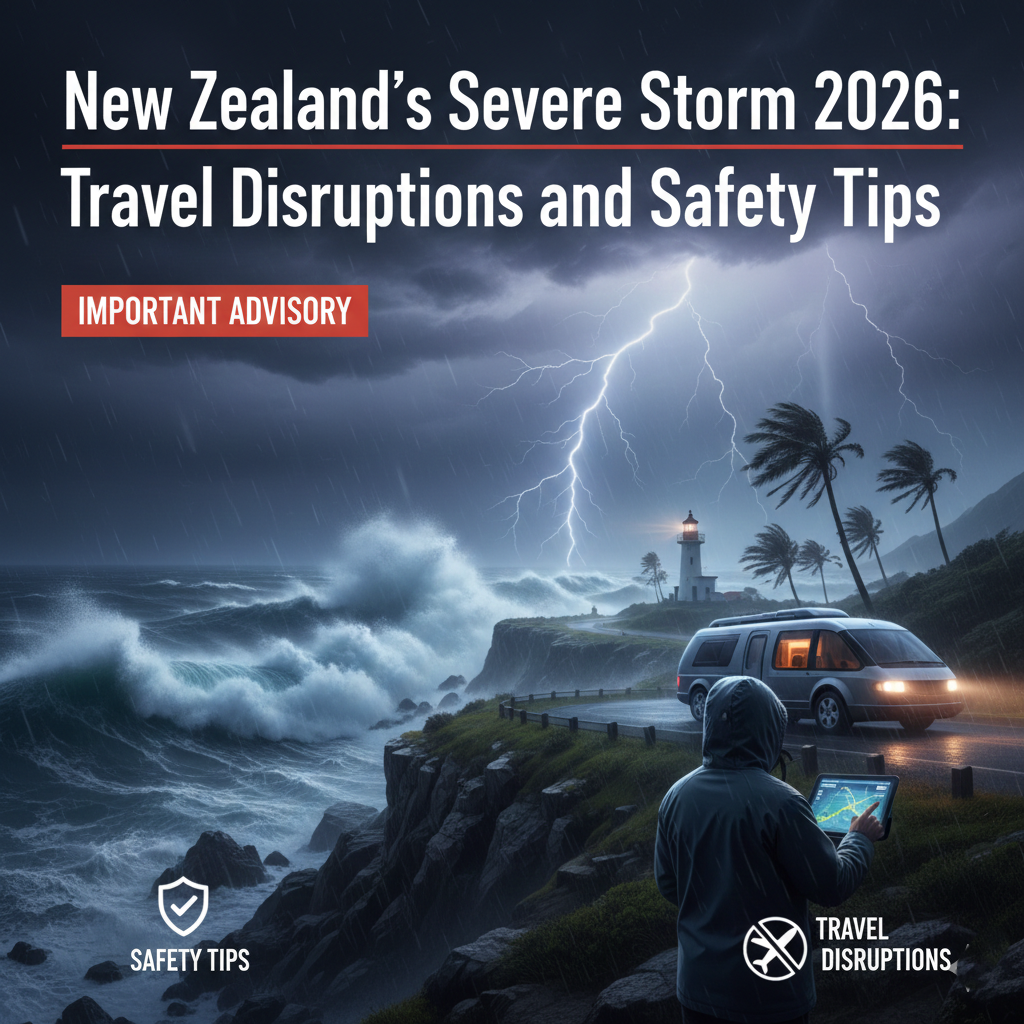
When people think of New Zealand, they often imagine clear blue lakes, dramatic mountains, and friendly cities spread across two beautiful islands. But in mid-February 2026, nature reminded everyone just how wild this country can be.
A severe storm system — whipping heavy rain, gale-force winds, severe flooding, and widespread power outages — hammered the North Island, leaving tens of thousands without electricity, paralyzing transportation networks, and throwing travel plans into chaos.
Whether you’re a visitor stuck in the middle of it, a resident trying to get safely from point A to B, or someone planning a trip in the coming weeks, this is a moment that demands clear guidance and practical preparation.
Here’s what’s happening, why it matters, and exactly how travelers and locals should respond.
What’s Happening in New Zealand Right Now
A deep low-pressure system has unleashed heavy rain and ferocious winds across much of the North Island, including major regions like Manawatū-Whanganui, Waikato, Wellington, and beyond.
Flooded streets and roads blocked by debris are common sights. Trees have been uprooted, power lines snapped, and rivers have breached their banks as communities deal with one of the most severe weather events in years.
Local authorities have declared states of emergency in multiple districts as they respond to rising rivers, landslides, and infrastructure damage.
This is not isolated rain. It’s a national-scale event that’s affecting daily life, mobility, and safety on a large scale.
How Travel Has Been Impacted
Airports and Flight Cancellations
One of the most visible effects has been on air travel.
Airlines have canceled or delayed hundreds of flights at key airports — including Wellington, Napier, Palmerston North, Auckland, and Christchurch — as extreme winds, flooding, and runway hazards made operations unsafe.
At Wellington International Airport, the storm’s severity made take-offs and landings nearly impossible for several hours, forcing a temporary suspension of flights as safety protocols kicked in.
New Zealand’s national carrier, Air New Zealand, has borne much of the disruption, with cancellations and delays affecting both domestic and regional services. Smaller carriers like Jetstar and Sounds Air have also seen widespread schedule interruptions.
Even flights that are operating are subject to sudden changes as conditions evolve — travelers should expect waiting times at airline counters and shifting departure times.
What this means for you:
- Check your flight status multiple times before leaving for the airport.
- Expect delays and long queues at ticket counters and check-in desks.
- Be ready to be rebooked, or seek refunds if your flight is outright canceled.
Road Travel and Public Transport
Closed and blocked roads are another huge challenge.
The infrastructure in parts of the lower North Island is under pressure. Flooded highways, fallen trees, and damaged bridges have cut off regions temporarily, with emergency crews actively working to clear debris and restore access.
Public transport systems are also affected — trains may be suspended if tracks are compromised, and ferries across the Cook Strait (connecting the North and South Islands) have been canceled because of rough seas and high winds.
What you should do:
- Avoid non-essential driving in affected regions.
- If you must drive, only use major main roads that have been officially cleared and inspected.
- Stay updated on KiwiRail and ferry operator advisories if you’re planning inter-island travel.
Power Outages and Service Interruptions
More than 30,000 homes and businesses have lost electricity as powerful wind gusts toppled trees and broke power lines — including thousands in the Wellington region itself.
Power cuts affect more than just lights. They reduce:
- Mobile network coverage in some areas
- Functionality of bank ATMs
- Fuel station operations
- Traffic lights and essential services
Travelers relying on battery-powered devices, ride-share apps, and digital boarding passes need backups like portable chargers and physical documents where possible.
Safety Tips for Travelers and Residents
This isn’t just a mild inconvenience — the weather conditions are dangerous. Here’s how to protect yourself:
1. Stay Informed with Official Sources
New Zealand’s MetService, Civil Defence, and local authorities are issuing real-time warnings. Check these before planning any movement:
- MetService website or mobile app
- Local Civil Defence updates
- Airline flight status alerts
Don’t rely solely on social media — official channels give the most accurate and updated directives.
2. Avoid Travel During Severe Weather Warnings
If heavy rain, wind, or flood watches are in place — don’t travel unless absolutely necessary.
Even if a destination looks fine on the map, conditions can deteriorate quickly between cities, especially on rural roads.
3. Prepare for Delays and Backups
Whether you’re at the airport, bus station, or railway, expect disruption.
Pack snacks, water, necessary medication, and entertainment if you’re waiting. Phones on low battery only add stress when networks are spotty.
4. Connect With Your Embassy or Airline for Support
If you’re an international traveler and are stranded:
- Contact your embassy or consulate — they can provide guidance on travel rules, documentation, and local services.
- Talk to your airline about rebooking options, travel credits, or refunds.
Many airlines offer flexibility for extreme weather disruptions, but policies vary.
5. Respect Local Evacuation and Safety Orders
Authorities have declared states of emergency in places like Manawatū, Rangitīkei, Tararua, Waipā, and Ōtorohanga — meaning that these regions may have restricted movement or evacuated zones.
If authorities say to leave an area, take it seriously — rivers can rise suddenly, and debris flows are a real risk.
What Travelers Can Do Now to Adjust Plans
Check Before You Book
If you haven’t booked travel yet, consider postponing trips into the lower North Island until weather and infrastructure stabilize.
Regions less affected right now — such as South Island cities like Queenstown or Christchurch — may still be accessible and enjoyable with fewer risks and delays.
Be Flexible With Your Itinerary
Storm disruption can cause:
- Missed connections
- Canceled tours
- Shut-down attractions
- Delayed ferry crossings
Build extra days into your itinerary to absorb unexpected delays without disappointment.
Travel Insurance Is More Important Than Ever
Comprehensive travel insurance can cover:
- Trip interruption costs
- Accommodation extensions if you’re stuck
- Medical emergencies due to weather
- Rebooking fees
Check your policy’s severe weather coverage, and know how to file a claim before you need it.
Consider Alternative Transit Options
If flights are grounded and weather improves:
- Long-distance buses across main highways may operate safely.
- Rental cars could work for stable roads (only if conditions are cleared).
- Ferries, once resumed, can provide connections between islands.
Always verify schedules and safety updates before planning ground travel, as conditions can change quickly.
How This Storm Compares to Previous Weather Events
New Zealand has a history of volatile weather — from tropical cyclones to heavy rain events and strong winds. But this 2026 storm stands out in its scale and impact on travel infrastructure.
Heavy rain earlier in the year already prompted evacuations and flooding in parts of the North Island, with rivers rising and landslides reported.
The current event builds on that background, showing how cumulative wet conditions — combined with strong winds — can push communities and transport systems to a breaking point.
For context, earlier storms have also caused closures and cancellations, but rarely with the same geographic breadth and simultaneous impact on flights, power, and roads.
What Happens Next — Weather Outlook and Recovery
Meteorologists are tracking this storm as it moves slowly southward, but heavy rain and strong winds remain a threat in the immediate future.
Recovery depends on:
- Clearing debris and fallen trees from major highways
- Restoring power lines and communication networks
- Reestablishing regular airline and train schedules
- Continued monitoring of rivers and flood basins
Authorities urge everyone — residents and tourists — to stay indoors when alerts are in place, and only travel when official advisories confirm it is safe.
Final Thoughts: Safety First, Flexibility Always
Travel in New Zealand — like travel anywhere — always carries a bit of uncertainty. But in situations like this wild storm, planning and caution matter:
- Stay informed via official weather services
- Expect delays and disruptions
- Don’t ignore closures or evacuation orders
- Protect yourself with flexibility and insurance
Severe weather can test even the most seasoned travelers, but with calm preparation and updated information, you can navigate these unexpected challenges without putting yourself at risk.
New Zealand will, as it always does, recover from this storm — but the priority right now is people and safety, not perfect travel plans.
According to Reuters, a powerful storm has hit New Zealand’s North Island — disrupting flights, closing roads, halting trains and ferries, and leaving more than 30,000 properties without power as emergency services respond. The weather has forced cancellations at airports such as Wellington, Napier, and Palmerston North, and authorities warn dangerous conditions are continuing as the system moves southward.
If this wild weather has you rethinking your next destination — or just itching to explore somewhere calmer — spin our Random Country Generator and let the world surprise you. One click, one new place, zero overthinking. Because sometimes the best travel plan is the one you didn’t see coming.
Leave a Reply