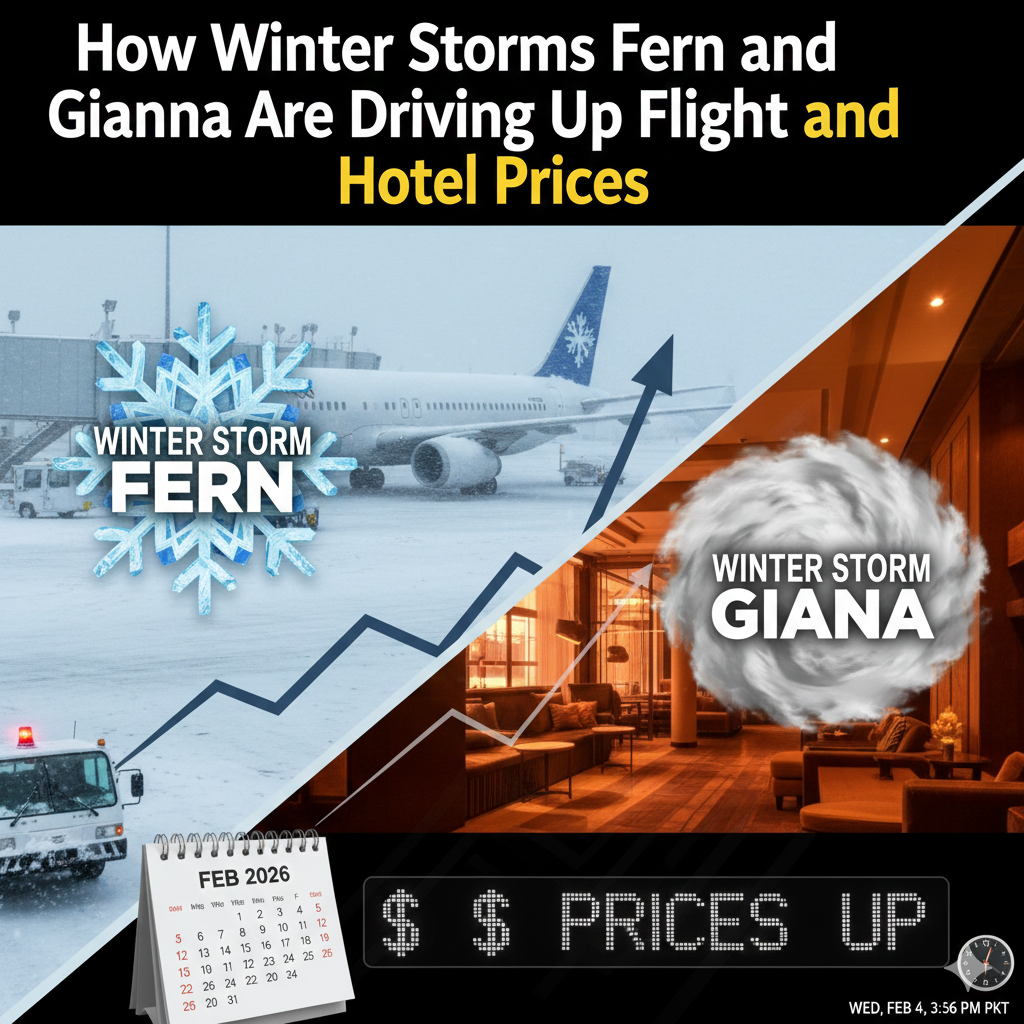
Winter storms don’t just cancel flights. They quietly rewrite the economics of travel for weeks afterward.
Winter Storm Fern already bulldozed through much of the U.S., grounding planes, knocking out power grids, and forcing airlines into damage-control mode. Now Gianna is lining up behind it, threatening the East Coast with another round of snow, wind, and operational chaos.
The result isn’t just travel disruption. It’s Hotel prices distortion—a messy chain reaction that makes flights cost more, hotels spike unpredictably, and “normal” booking rules stop working.
This isn’t about panic. It’s about understanding why prices jump after major storms and how to avoid paying the post-storm tax.
Let’s break it down.
Why Winter Storms Make Travel More Expensive (Even After the Snow Stops)
Storm pricing isn’t driven by greed alone. It’s driven by supply shock.
Here’s what happens behind the scenes:
Flights get canceled by the tens of thousands. Planes end up stranded in the wrong cities. Crews time out and can’t legally fly. Airports shut down baggage systems. Maintenance schedules collapse.
Once the storm passes, airlines don’t magically snap back to normal. They’re playing logistical Tetris with fewer working pieces.
That means:
- Fewer available seats for days or weeks
- Rebooked passengers clogging inventory
- Limited aircraft availability on popular routes
When supply drops and demand stays the same—or increases—prices climb. Quietly. Aggressively.
Hotels experience the same thing, but for different reasons.
Hotels: Why Hotel Prices Spike After the Storm (Even in Cities You Didn’t Expect)
You’d think hotels would get cheaper after a storm. People cancel trips, right?
Sometimes. But after a storm like Fern, three things push prices up, not down:
First, displaced travelers. When flights get canceled, thousands of people get stuck overnight. Hotels near airports and transit hubs fill instantly.
Second, utility and infrastructure issues. Power outages force hotels to shut down rooms or entire floors. Fewer usable rooms means higher prices for what’s left.
Third, recovery crews. Utility workers, insurance adjusters, emergency responders, and contractors flood into affected regions. They book long stays—and they’re not price shopping.
That’s how you end up with a random mid-range hotel suddenly charging luxury prices two weeks after a storm.
The “Double Storm Effect”: Why Fern + Gianna Is Worse Than One Storm
One storm creates disruption. Two storms create compounding scarcity.
Fern already forced airlines to burn through spare aircraft and crews. Gianna threatens to interrupt recovery just as systems were stabilizing.
This creates:
- Delayed rebalancing of aircraft across hubs
- Extended booking pressure on unaffected routes
- Higher fares even in cities far from snow zones
A flight from Chicago to Phoenix can get more expensive because Boston is buried in snow. That’s the non-obvious part travelers miss.
Airlines price globally, not locally.
Flight Prices: Where the Spikes Are Showing Up
Post-storm pricing tends to follow patterns.
Routes most affected:
- East Coast ↔ Midwest
- Southern hubs feeding into Northeast airports
- International flights connecting through East Coast gateways
What’s happening is not uniform price hikes. It’s fare cliffs.
One day a flight costs $280. The next day it’s $460. Then it drops again. Then spikes higher.
That volatility is airlines adjusting inventory in real time as cancellations, waivers, and rebookings ripple through the system.
If it feels chaotic, that’s because it is.
Cancellations Don’t Just Remove Flights — They Reshape Demand
Here’s the sneaky part.
When airlines cancel flights, those passengers don’t disappear. They get rebooked—often days later—into future flights that were already partially full.
That means:
- Cheap fare buckets vanish faster
- Last-minute inventory becomes premium-priced
- Flexible travelers unintentionally subsidize stranded ones
You’re not paying more because you booked late. You’re paying more because someone else got pushed into your seat three days ago.
When Prices Are Likely to Drop Again (And When They Won’t)
Storm-driven price spikes usually fall into three phases.
Phase one: Immediate chaos
Prices jump or disappear entirely. Don’t book unless you absolutely must.
Phase two: Artificial scarcity
This is the dangerous phase. Flights technically exist, but prices are inflated because systems are still clogged. This can last 7–14 days after a major storm.
Phase three: Correction
Once aircraft and crews normalize, airlines quietly release lower fare buckets again.
The trick is recognizing which phase you’re in.
Right now, with Fern’s aftermath and Gianna approaching, most U.S. travel is stuck between phase two and sliding backward into phase one again for the East Coast.
That’s not a great moment to panic-book.
The Best Time to Book Right Now (Counterintuitive but True)
If your travel is:
- Non-essential
- Flexible by 5–10 days
- Not tied to a specific event
The smartest move is often waiting.
Prices usually stabilize once:
- Airline waivers expire
- Rebooking backlogs clear
- Media coverage fades (yes, that matters)
If you must book now, look for:
- Flights with one stop instead of nonstop
- Early morning or late-night departures
- Routes avoiding major hubs under weather stress
The prettiest itinerary is rarely the cheapest after a storm.
Hotels: When to Book, When to Hold
Hotels behave differently from flights.
Airport hotels spike first. Downtown hotels spike second. Suburban hotels lag behind.
If you’re booking:
- Near a major airport: wait if possible
- In a storm-affected city center: monitor daily
- Outside metro cores: prices may already be normalizing
One practical trick: book refundable rates now, then recheck prices every 48 hours. Hotels adjust faster than airlines once demand softens.
Refundability is insurance in chaos season.
Why Travel Insurance Suddenly Matters Again
Most people buy travel insurance thinking about illness or lost bags. Winter storms expose the real value: trip interruption and delay coverage.
Storms like Fern and Gianna trigger:
- Extra hotel nights
- Rebooking fees on non-waived tickets
- Meals and transportation costs
Insurance doesn’t make storms go away, but it turns financial bleeding into a controlled wound.
If you’re booking during peak winter volatility and skipping insurance, you’re basically raw-dogging meteorology.
The Psychological Trap: Panic Booking
Here’s the human mistake that costs the most money.
People see cancellations on the news and rush to “lock something in.” Airlines love this moment. Algorithms detect urgency instantly.
Prices surge not because seats are scarce—but because people are scared.
Storm travel rewards patience, not speed.
Waiting 24–72 hours after a disruption often reveals:
- Newly released inventory
- Waiver-based rebooking openings
- Quiet fare drops airlines don’t advertise
The calm traveler pays less than the anxious one.
Regions Likely to Stay Expensive Longer
Based on storm patterns and recovery timelines, prices are likely to stay elevated in:
- Northeast corridor cities
- Major East Coast hubs
- Snow-impacted Midwest connectors
Regions likely to normalize faster:
- West Coast
- Southwest
- Southern leisure destinations
Travel demand doesn’t vanish—it shifts. Follow where pressure eases, not where headlines scream.
The Big Picture: Storms Are the New Price Shock
Climate volatility is making winter travel pricing less predictable, not more.
Storms like Fern and Gianna don’t just cause one bad week. They create rolling distortions across airlines, hotels, and routes.
Travelers who understand this stop blaming themselves for “booking wrong” and start making smarter, calmer decisions.
You can’t control the weather.
You can control when you book, how flexible you stay, and whether you pay the chaos tax.
Final Thought
Winter storms don’t end when the snow melts. They linger in prices, availability, and booking psychology.
If travel suddenly feels more expensive, it’s not your imagination. It’s logistics catching up with reality.
And in moments like this, the smartest travel strategy isn’t chasing deals—it’s avoiding bad ones.
Winter storms have a funny way of reminding us how fragile even the best-laid travel plans can be. If Fern and Gianna have made one thing clear, it’s that flexibility isn’t just nice to have — it’s survival. If you’re feeling stuck, overwhelmed, or just want to shake things up a little, take the pressure off planning. Let chance decide your next adventure. Try our Random European Country Generator and see where the map drops you — sometimes the smartest travel move starts with letting go of control.
Winter Storm Fern didn’t just affect air travel — it caused widespread power outages, economic disruption, and major travel delays across the country, contributing further to post-storm demand spikes and pricing instability for hotels and flights alike.
🔗 Source: Airports still crippled by Winter Storm Fern — extended coverage of travel and infrastructure impacts.
Leave a Reply