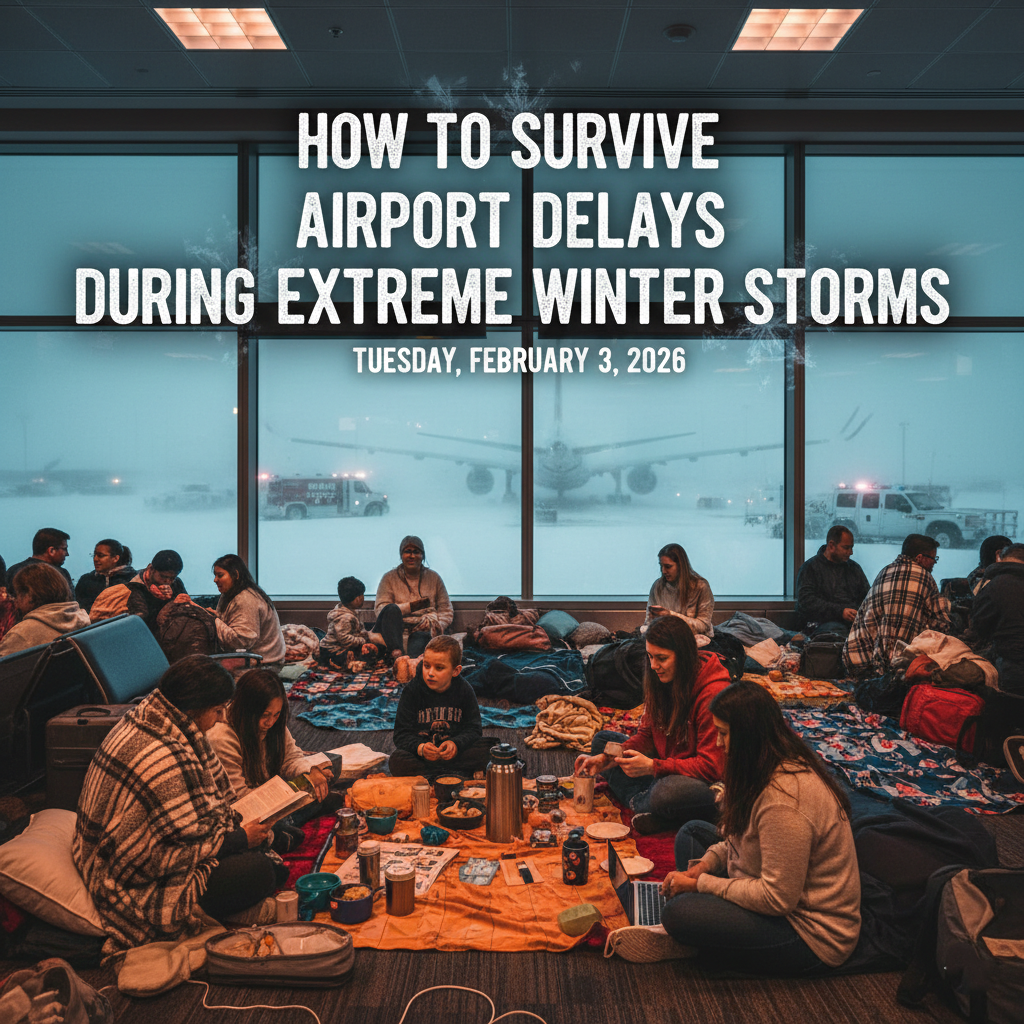
Real survival tactics for when the departures board turns red with Airport Delays
Winter storms don’t politely cancel your flight and send you home with a voucher and a hug. They trap you in fluorescent-lit limbo, surrounded by strangers, misinformation, and the faint smell of pretzels.
After Winter Storm Fern and with Storm Gianna lining up like the sequel nobody asked for, airports across the U.S. have become endurance tests. Flights cancel. Crews time out. Luggage goes on mysterious spiritual journeys.
This guide isn’t romantic. It’s practical. It’s about food, power, shelter, rebooking, waivers, and staying sane when travel plans collapse.
Let’s get into it.
First Rule of Airport Delays: Assume You’re Staying Longer Than They Say
Airline announcements are optimistic by design. “Delayed 45 minutes” often means “cancelled in two hours after you’ve already missed your backup.”
The moment extreme winter storms are active, mentally upgrade your delay from temporary to potential overnight. This mindset shift changes everything: where you sit, what you buy, and how fast you act.
People who wait for certainty lose. People who prepare early sleep indoors.
Food Strategy: Eat Before You’re Hungry
Airports run out of food fast during storms. Not metaphorically. Literally.
When delays stack up:
- Restaurants close early due to staff shortages
- Delivery trucks can’t reach terminals
- Lines stretch until boarding calls become ancient history
What to do immediately:
Eat now, not later. Even if you’re not hungry. Especially if you see a line under 10 minutes.
Buy food that:
- Doesn’t need heating
- Travels well
- Won’t explode in your bag
Think sandwiches, protein bars, trail mix, bananas, crackers. You are fueling for uncertainty, not dining for pleasure.
Pro tip: Buy extra. Future-you will be grateful and possibly heroic to nearby strangers.
Charging: Power Is Currency During Delays
When storms hit, power outlets become a competitive sport.
Airports were not designed for thousands of stranded travelers charging phones, laptops, earbuds, and power banks simultaneously.
Survival moves:
Carry a power bank if you have one — ration it like water in a desert.
Switch your phone to low power mode immediately.
Turn off Bluetooth, background refresh, and doom-scrolling apps.
Screenshot boarding passes, confirmations, and hotel details in case Wi-Fi dies.
If you find a working outlet, do not abandon it lightly. People have lost prime charging real estate faster than airline seats.
Seating Strategy: Choose Survival Over Comfort Aesthetics
The pretty seating areas fill up first. Then come the floors.
Scout locations early:
- Near gates with power
- Away from high foot traffic
- Close to restrooms but not too close
If you think you might be sleeping:
- Avoid areas near automatic doors
- Avoid announcement speakers
- Avoid cleaning crew pathways
Yes, this is grim. Airports become ecosystems under stress. Position matters.
Airline Waivers: Your Best Weapon (If You Use Them Correctly)
During major winter storms, airlines usually issue weather waivers. These allow you to:
- Rebook without change fees
- Switch flights within a certain date range
- Sometimes change routing entirely
Here’s the trick most travelers miss:
Waivers are time-sensitive and capacity-limited.
The moment a waiver is announced:
Rebook yourself in the app or online.
Do not wait for an agent unless absolutely necessary.
Do not assume better options will appear later.
The best seats disappear first — often before the cancellation email even hits your inbox.
If the app fails, try the website. If that fails, call while simultaneously queuing at the desk. Parallel effort wins.
The Desk vs Phone vs App Reality Check
Airport agent desks feel official, but they’re usually the slowest option during storms.
Apps and websites update faster and give you more control.
Phone agents can help, but wait times balloon fast.
Desks are for edge cases: missed connections, crew misrouting, complex itineraries.
Rule of thumb:
Self-service first.
Human escalation second.
Desk as last resort.
Hotel Chaos: How to Actually Secure a Bed
When winter storms cause mass cancellations, nearby hotels fill instantly. Shuttle availability becomes mythical.
If you suspect an overnight delay:
Book a refundable hotel immediately.
Even if you’re not 100% sure.
You can cancel later.
Waiting until a cancellation is official often means every room within 20 miles is gone.
Also:
Ask the airline about hotel vouchers, but don’t rely on them.
Weather-related delays usually don’t require airlines to pay — and availability is limited anyway.
Sometimes the best option is a hotel slightly farther away but accessible by rideshare before roads worsen.
Luggage Reality: Accept Temporary Separation
Checked bags during winter storms often go places you don’t.
Prepare emotionally.
Pack essentials in your carry-on:
Medications
Chargers
A change of clothes
Basic toiletries
If your flight cancels after bags are checked:
Ask immediately whether bags can be retrieved.
Sometimes yes. Often no.
Knowing this ahead of time reduces panic — and airport floor fashion regrets.
Downtime Strategy: Stay Functional, Not Entertained
The goal isn’t to “enjoy” the delay. It’s to remain calm, alert, and capable of making good decisions.
Avoid:
Alcohol-fueled coping
Doom-refreshing flight boards every 30 seconds
Spiraling group chats
Do:
Download content while Wi-Fi is stable
Stretch occasionally
Drink water (yes, even if bathroom lines are annoying)
Sleep when you can
Fatigue makes bad rebooking decisions. Storm travel is a marathon, not a sprint.
When to Leave the Airport (And When Not To)
Leaving the airport sounds appealing until roads freeze and rideshares vanish.
Leave if:
You have a confirmed hotel
Ground conditions are stable
You’re not risking missing an early rebooked flight
Stay if:
You’re on standby
Road conditions are worsening
Hotels are fully booked
Airports, for all their discomfort, are usually safer and warmer than being stranded between locations.
The Psychological Survival Rule
Everyone around you is stressed, misinformed, and tired. Including airline staff.
Kindness doesn’t magically fix delays — but it does increase your odds of help when options are scarce.
The calm traveler with a clear plan almost always fares better than the loud one demanding miracles.
The Big Picture: Why This Keeps Happening
Extreme winter storms like Fern and Gianna strain systems designed for “normal” winter, not historic cold, grid stress, and back-to-back events.
Airports are not broken — they’re overwhelmed.
Knowing this doesn’t make delays fun. It makes them survivable.
Final Thought: Preparation Beats Luck Every Time
You can’t stop winter storms.
You can’t control cancellations.
But you can control how quickly you adapt.
Eat early.
Charge everything.
Rebook fast.
Think one step ahead.
Airport delays during extreme winter storms isn’t about comfort — it’s about staying mobile, powered, and informed while chaos does its thing.
And when you finally board that flight hours (or days) later, you’ll notice something strange:
The calmest travelers always look like they expected this.
Because they did.
Feeling trapped at the airport makes you dream of spontaneous escapes, right? Once the chaos clears, why not let fate pick your next adventure? Use our Random European Country Generator to discover a new destination and plan your next trip — no stress, no overthinking, just pure wanderlust.
According to The Points Guy, Winter Storm Gianna has caused thousands of flight cancellations across the East Coast and beyond as snow and high winds batter major travel hubs, forcing airlines to adjust schedules and warn passengers of ongoing delays.
Leave a Reply