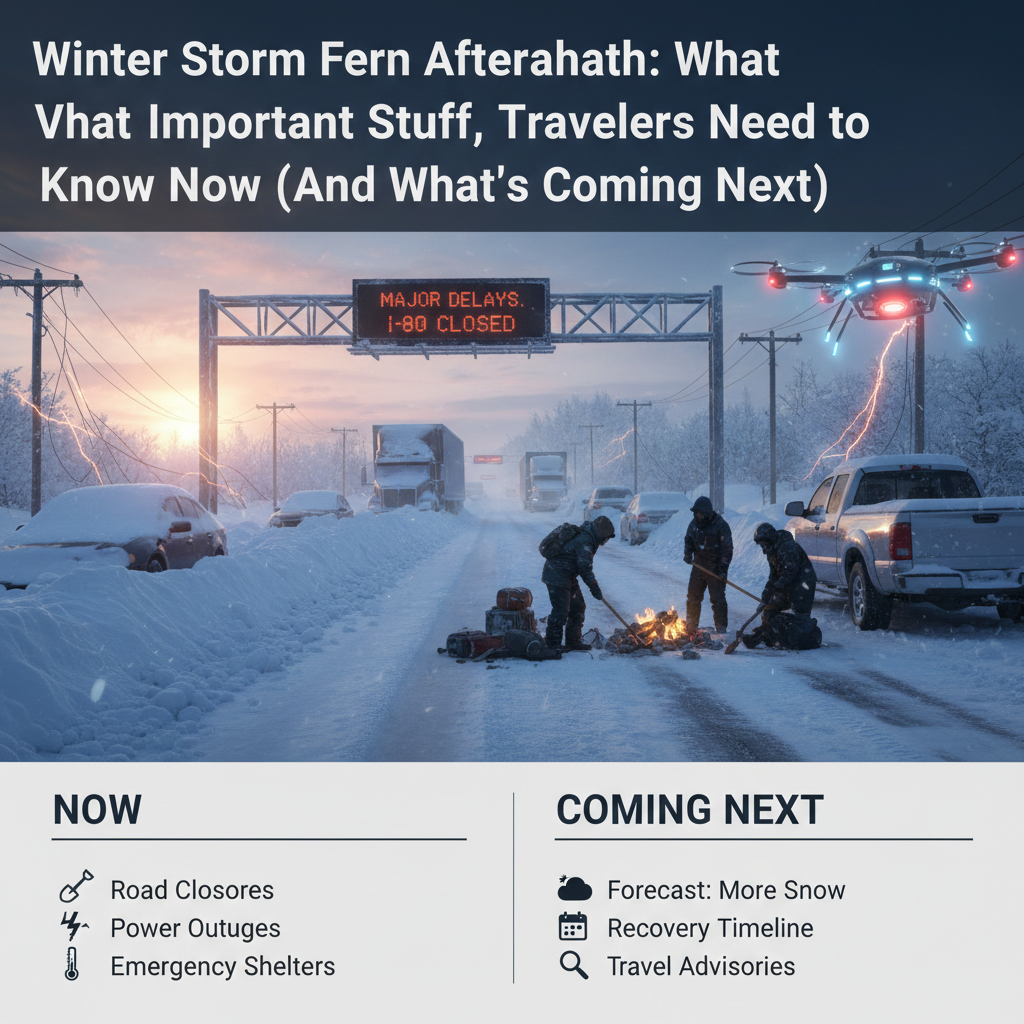
Winter Storm Fern is officially gone. The snow has stopped falling, the radar maps have calmed down, and yet—travel across the United States is still very much a mess.
If you’re a traveler trying to get home, rebook flights, or figure out whether it’s even safe to move again, this is the confusing part of major winter storms that no one explains well. The storm leaves, but the disruption lingers. Sometimes for days. Sometimes for weeks.
Here’s what’s actually happening right now, why travel is still chaotic even though Fern has moved on, and what you should prepare for next with another storm already forming.
The Storm Is Over — The Damage Is Not
Fern tore through a massive portion of the U.S., impacting 34 states and stretching into parts of Canada. While the snowfall itself has ended, the aftermath is still unfolding in real time.
Power outages are one of the biggest immediate issues. At its peak, over a million people lost electricity. Even now, hundreds of thousands remain without power, particularly in parts of the Southeast and Northeast. For travelers, this matters more than it sounds. Airports, fuel stations, rail systems, and even hotel operations depend on stable power grids. When those grids are damaged, delays compound fast.
Infrastructure damage is another invisible problem. Roads may look “clear” but still be unsafe. Bridges, overpasses, and rural highways took serious hits, especially in states that aren’t built for sustained winter punishment. Mississippi alone reported multiple roads completely destroyed, with dozens more damaged. That kind of repair doesn’t happen overnight.
In short: Fern stopped snowing, but it broke a lot of things on the way out.
Why Flights Are Still a Nightmare
If you’re wondering why flights are still getting canceled or delayed days after the storm, here’s the uncomfortable truth: aviation recovery is slower than aviation shutdown.
During Fern, more than 26,000 flights were canceled over a four-day period. That creates a ripple effect that doesn’t just disappear when skies clear.
Aircraft end up in the wrong cities. Flight crews hit legal work-hour limits and time out. Maintenance schedules get disrupted. Airports face staff shortages because workers themselves couldn’t travel safely. Even baggage systems and de-icing equipment need inspections after extreme cold.
Then there’s the backlog. When tens of thousands of passengers are suddenly rebooked, the system clogs. Planes are full. Seats disappear instantly. One small delay can cascade across an entire network.
This is why travelers often feel gaslit during storms. The weather looks fine outside, but the airline system is still digging itself out of a logistical crater.
Is It Safe to Travel Again?
This is the question everyone asks, and the answer is frustratingly conditional.
In many regions, yes, travel is technically safe again—but not smooth. Roads may be open, but gas stations could be down. Airports may be operating, but with limited capacity. Rail routes may be running, but with reduced schedules.
The bigger concern right now is extreme cold. An arctic air mass is settling over much of the eastern U.S., with wind chills plunging to dangerous levels. That kind of cold can cause mechanical failures, burst pipes, frozen jet bridges, and vehicle breakdowns.
For travelers, this means:
- Expect delays even if you don’t see snow.
- Allow extra buffer time for everything.
- Keep emergency supplies if driving long distances.
- Avoid unnecessary travel in regions still under cold-weather advisories.
The storm may be gone, but winter itself is very much still in charge.
Hotels, Rentals, and “Hidden” Travel Problems
Flights get the headlines, but ground-level travel issues are quietly causing just as much stress.
Hotels in affected regions are dealing with burst pipes, power outages, and staffing shortages. Some reservations are being canceled last-minute because buildings aren’t fully operational. Rental car shortages are also popping up in major hubs as vehicles were stranded, damaged, or never returned during the storm peak.
Public transportation systems in colder regions are running reduced schedules while crews inspect tracks, signals, and switches damaged by ice and extreme temperatures.
All of this means travelers should double-check confirmations, call ahead when possible, and avoid assuming anything is “back to normal” just because the weather app looks calm.
The Human Cost Still Matters
Beyond logistics, it’s important to acknowledge the human toll Fern left behind. At least 60 lives were lost across multiple states, with some communities hit especially hard. Recovery efforts are ongoing, and many people are still dealing with displacement, power loss, and damaged homes.
For travelers passing through these regions, patience isn’t just polite—it’s necessary. Local systems are stretched thin, and recovery takes time.
And Now… Another Storm Is Forming
Just as Fern exits the stage, meteorologists are already watching the next act: a developing winter system informally referred to as Winter Storm Gianna.
This potential storm could intensify into a bomb cyclone or Nor’easter along the eastern seaboard. Areas at risk include the Carolinas, Virginia, and coastal New England—some of the same places that were already buried under heavy snow from Fern.
That matters because fresh snowfall on top of damaged infrastructure is a recipe for renewed chaos. Crews barely finished clearing roads. Power grids are already stressed. Airports are still recovering.
For travelers, this means one thing: now is the preparation window.
How to Prepare for the Next Storm Right Now
If you have travel planned in the next week, don’t wait.
Monitor airline policies closely. Many carriers issue flexible rebooking or waiver policies before storms fully hit. These are easiest to use early, not during peak panic.
Pack for delays, not best-case scenarios. Extra medications, chargers, snacks, and warm layers matter more than you think when systems slow down.
Avoid tight connections. If your itinerary relies on perfect timing, it’s fragile. Build in buffers wherever possible.
Stay informed from official sources. National Weather Service alerts and major weather tracking platforms are far more reliable than social media speculation.
The Bottom Line About Winter Storm Fern
Winter Storm Fern may be over, but its aftermath is still reshaping travel across the U.S. Flights remain unstable, infrastructure damage is real, and extreme cold continues to cause problems even without snow.
And with another storm potentially days away, travelers are caught in a narrow window between recovery and relapse.
This is the reality of modern winter travel: storms don’t end cleanly anymore. They echo. They overlap. And they demand flexibility, patience, and preparation.
Winter isn’t done yet. Travel wisely.
According to TravelPulse, Winter Storm Fern caused widespread travel disruptions across more than 30 U.S. states, bringing heavy snow and ice that grounded flights, delayed operations, and kept many airports and transportation networks working through significant recovery challenges.
To know, how cold the Winter Storm Fern is, Click to our Blog Here!
Leave a Reply