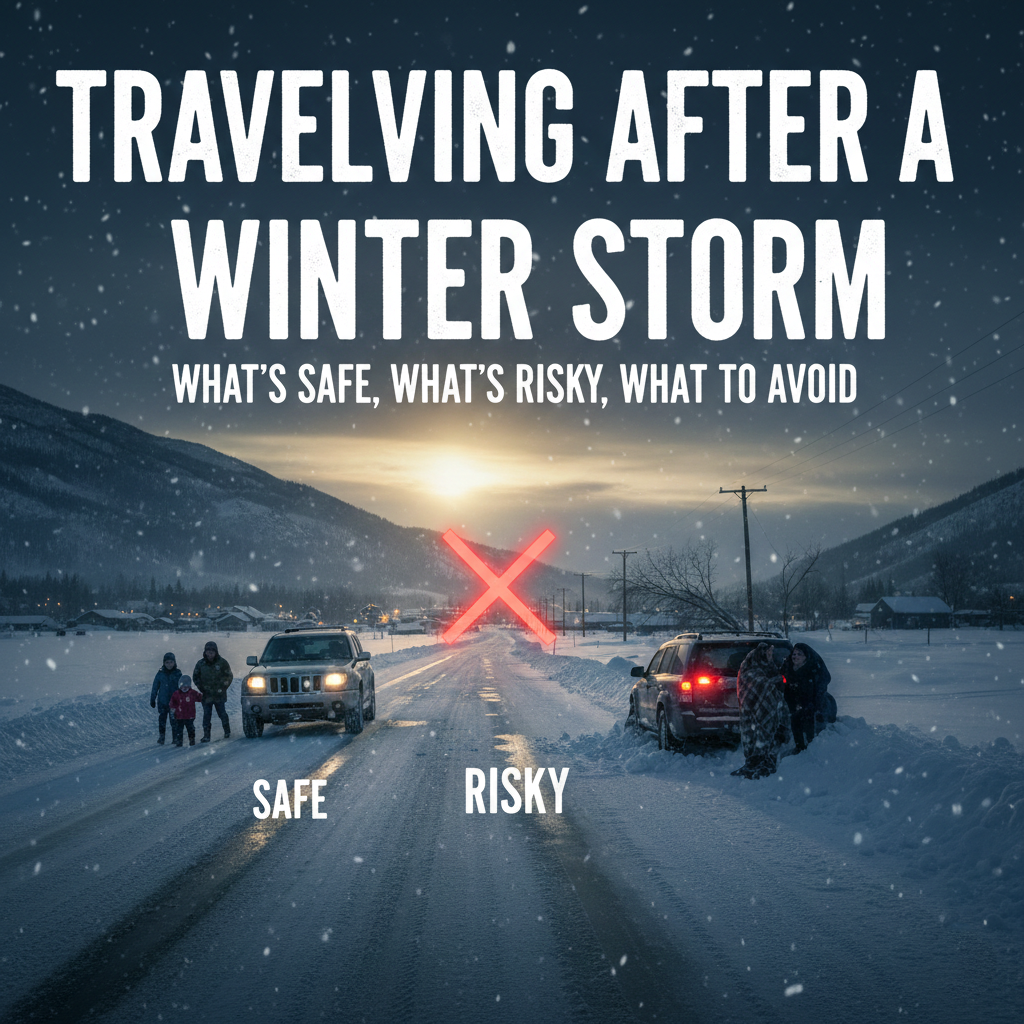
When a historic winter storm finally moves on, there’s a strange psychological whiplash that kicks in.
The snow stops falling.
The headlines calm down.
Your phone stops screaming alerts.
And yet… travel is still broken.
Winter Storm Fern may be gone, but its aftermath is exactly where travelers get burned—financially, logistically, and emotionally. The danger now isn’t the storm itself. It’s assuming everything is normal again when it absolutely isn’t.
This guide is about post-storm decision-making. Not fear. Not hype. Just realism.
Who should travel now.
Who should wait.
What regions are still risky.
And what mistakes to avoid if you don’t want your “quick trip” turning into a three-day survival side quest.
First Reality Check: Storms End, Systems Don’t Reset
The biggest misunderstanding travelers have is thinking that once snow stops, the travel system snaps back to normal.
It doesn’t.
After a storm like Fern, recovery happens in layers:
Airports reopen before airlines stabilize
Roads clear before traffic patterns normalize
Power returns unevenly
Hotels fill before prices drop
Staff shortages linger for days
This creates a deceptive calm. Things look functional—but they’re fragile.
Post-storm travel isn’t about weather anymore.
It’s about infrastructure stress.
Who Should Travel Now (Yes, Some People Actually Can)
Let’s start with the people who are genuinely okay to move.
You’re likely safe to travel if:
- Your destination is outside the storm footprint
- You’re flying point-to-point, not through major hubs
- You have flexible dates or refundable bookings
- You’re traveling for non-urgent reasons and can bail easily
- Your route avoids regions with ongoing power or grid strain
Example:
Flying from Southern California to Arizona? Probably fine.
Driving short distances in regions where roads are fully cleared and temperatures are stable? Usually okay.
The key trait here isn’t bravery. It’s exit options.
If your plans collapse, can you afford to pause?
If yes, travel is possible.
Who Should Wait (Even If Tickets Are Tempting)
Now for the harder truth.
You should strongly consider delaying travel if:
- Your route involves major hubs (Chicago, NYC, Atlanta, Dallas, Denver)
- Your destination is in a region still experiencing extreme cold
- You’re on a tight schedule (weddings, conferences, cruises)
- You can’t absorb extra hotel nights or rebooking costs
- You rely on public transit at your destination
Post-storm backlog is brutal. Flights may technically operate, but crews are displaced, aircraft are out of position, and one small delay can cascade into cancellations.
If your margin for error is zero, don’t roll the dice.
Regions Still Risky Right Now (Even Without Snow)
This is where people get caught off guard.
❄️ Extreme Cold Zones
Snow is gone. Ice is gone. But arctic air remains.
Why this matters:
- Vehicles fail more often
- Battery life drops fast
- Fuel lines freeze
- Outdoor exposure becomes dangerous quickly
Wind chills below zero turn small inconveniences into emergencies.
Travel here only if necessary—and only with preparation.
⚡ Areas With Grid or Power Strain
Even if your hotel has power, the surrounding infrastructure may not.
Risks include:
- Gas station closures
- Limited heating options
- Spotty cell service
- ATM outages
Traveling into a partially powered region means less margin for mistakes.
🚧 Infrastructure Damage Zones
Some regions may look fine visually but have hidden issues:
- Damaged roads and bridges
- Temporary traffic patterns
- Reduced emergency services
GPS routes don’t always reflect storm damage yet.
If you’re driving, this matters more than snowfall totals.
Air Travel After a Major Storm: What’s Actually Happening
Let’s talk airports.
After a storm like Fern:
- Planes are scattered
- Crews are timed out
- Maintenance backlogs pile up
- Rebooking queues stretch days
Even flights that depart on time are vulnerable to mid-journey disruptions.
What to do if you must fly:
- Choose early-morning flights (less domino effect)
- Avoid tight connections
- Book refundable fares if possible
- Screenshot airline waivers
- Monitor alternate airports within driving distance
Flying right after a historic storm is less about weather and more about network recovery speed.
Driving After the Storm: Safer, But Not Automatically Safe
Many travelers switch to road trips when flights collapse. Sometimes that’s smart. Sometimes it’s dangerous.
Driving is reasonable if:
- Roads are fully reopened
- Temperatures are stable
- Distance is manageable
- You’re familiar with the route
Driving is risky if:
- Ice storms preceded snow
- Emergency services are stretched
- You’re crossing rural or mountainous regions
- Fuel stations are unreliable
If you drive, pack like you might get stuck—not because you will, but because you might.
Blankets. Food. Water. Power banks.
Storms don’t need drama to cause trouble.
Hotels, Rentals, and “Everything Is Full” Syndrome
Post-Winter Storm demand spikes fast.
Travelers stranded earlier are still checking out.
Insurance stays extend bookings.
Crews occupy blocks of rooms.
This means:
- Prices stay inflated
- Availability lies online
- Walk-ins get rejected
Smart moves:
- Call hotels directly
- Ask about storm flexibility
- Book refundable rooms early
- Avoid waiting until evening
Hotels are more forgiving right after winter storms—but only if you communicate early.
What to Avoid at All Costs
Let’s save you pain.
❌ Don’t chase rebookings across hubs
You’ll burn time and money for marginal gains.
❌ Don’t assume “cleared” means “safe”
Cleared roads ≠ stable systems.
❌ Don’t rely on last-minute transportation
Rental cars, trains, and buses sell out unpredictably.
❌ Don’t push through fatigue
Post-storm travel is mentally draining. Bad decisions come from exhaustion.
The Psychological Trap: “I Just Want This Over”
This is the real danger.
After disruption, people want closure. They rush. They force plans. They ignore warning signs.
Winter Storms punish impatience.
The calm traveler who waits 24–48 hours often:
- Pays less
- Sleeps better
- Gets home faster overall
Waiting is not failure. It’s strategy.
If Your Trip Is Fully Ruined Because of the Now Historic Winter Storm Fern
Sometimes the best move is letting go.
Cancel what you can.
Recover what you can.
Pause.
And when you’re ready to travel again, consider something lighter—less rigid, less pressured.
That’s why tools like a Random European Country Generator resonate after chaos. When planning fails, curiosity can replace control. Not every trip needs to be optimized. Some just need to exist.
Final Thought
Traveling after a historic winter storm isn’t about bravery or stubbornness.
It’s about judgment.
The storm may be gone, but recovery is uneven, fragile, and slow. If you travel now, do it with flexibility. If you wait, do it without guilt.
The goal isn’t to beat the system.
It’s to move with reality instead of against it.
Winter storms remind us of something travel often hides:
control is temporary—but adaptation is permanent.
And that lesson, inconvenient as it is, sticks long after the snow melts.
According to Business Insider, Winter Storm Fern caused more than 19,000 flight cancellations across U.S. airports, marking one of the largest aviation disruptions in recent history. Major hubs like Dallas‑Fort Worth, Charlotte, and New York City saw thousands of canceled flights as heavy snow, ice, and extreme cold spread across the country, forcing airlines to adjust routes and rebook passengers.
🔗 For full coverage of travel and broader impacts from the storm, see Business Insider’s report on Winter Storm Fern’s disruption.
Leave a Reply