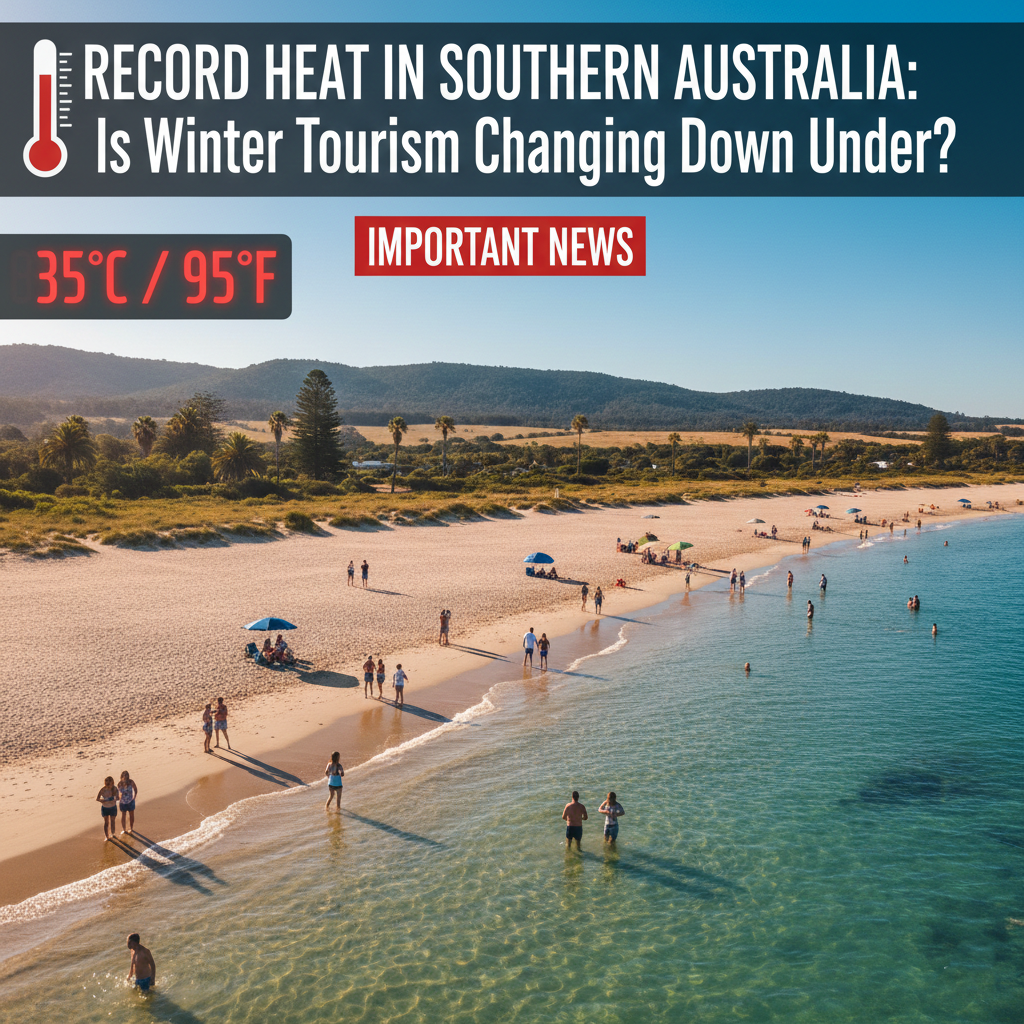
When most people think of Australia, their minds flip between two visions: sun‑soaked beaches and rugged outback adventures. What rarely comes up is winter weather—not because Australia doesn’t have seasons, but because winter there traditionally means mild temperatures and comfortable travel conditions in the south.
2026 is rewriting that script.
Right now, parts of southern and southeastern Australia have been scorched by record heat, with towns pushing—or even exceeding—50 °C (122 °F) at the height of summer and winter‑shoulder periods. That’s an eye‑popping temperature for any season, and it’s happening precisely when Australia’s winter tourism season either begins or is being planned.
This isn’t a one‑off weather blip; it’s a clash between extreme climate swings and traditional tourism expectations.
Let’s unpack what’s going on, how it’s affecting travelers, and what to consider if you’re planning a trip “down under” this year.
Southern Australia’s Record Heatwave in Context
In late January and early February 2026, sustained heatwaves gripped southeastern Australia—particularly South Australia, Victoria, and New South Wales. Temperatures soared well above 40 °C, with inland towns like Andamooka recording 50 °C—only the eighth time in recorded Australian history that benchmark has been reached.
These heatwaves didn’t just flirt with records. They smashed them, setting new marks across multiple interior and coastal locations. What would have been extreme even in mid‑summer has become reality in late summer/early “tourism season.”
It’s also worth noting that climate science shows these extreme events are more likely today than they would have been in the past, thanks to human‑driven warming trends amplifying typical heatwave conditions.
Why Heat Changes the Travel Game
Heatwaves aren’t just bad for thermometers—they affect the entire travel experience:
1. Outdoor Activities Become Fatigue Traps
Hiking, safari tours, wildlife viewing, and coastal excursions rely on moderate temperatures. When it’s 45 °C or above:
- The human body struggles to cool down
- Dehydration becomes a major risk
- Outdoor adventure tours often cancel or reschedule for safety
Medical experts warn that sustained exposure in extremes like 49 °C is not safe for prolonged periods, even for healthy individuals.
For travelers expecting temperate winter weather, blistering heat can turn plans into riskier decisions.
2. Wildfire Risk and Tourism
Heat + dry conditions = wildfire danger—a factor that’s been all too real for Australia in recent years. Southern bushfire warnings have accompanied recent heatwaves, forcing some parks and hiking areas to restrict access or close entirely to protect visitors and locals alike.
For people visiting national parks or rural regions in winter, the perception of seasonal calm no longer matches reality.
3. Health Advisories and Travel Warnings
Even governments are catching up to the travel risk. For example, international advisories have been issued warning of extreme heat risks to travelers—especially those not acclimated or prepared with hydration, shade planning, and physical readiness.
That’s unusual for a region normally marketed as a winter escape.
4. Beach Cities Aren’t Safe Cool Havens Anymore
Coastal towns that once relied on their ocean breezes can’t always escape inland heat domes. Record inland temperatures often push warmer air toward the coast, raising local sea‑level temperatures and humidity, which can make beach days uncomfortable and even heat‑risky for swimmers and casual visitors.
This matters for cities like Adelaide, Melbourne, and even some Tasmanian spots that used to be reliably temperate at this time of year.
5. A Broader Climate Shift for Winters in the Southern Hemisphere
Experts are increasingly pointing to a larger trend: unusually warm winters for parts of Australia don’t occur in isolation—they’re part of a pattern of increasing heat extremes globally. Severe events here coincide with anomalous cold in the Northern Hemisphere, reflecting greater climate volatility, not simple “weather noise.”
That context matters for travelers making long‑term plans—not just one‑off trips.
What This Means for Travelers Right Now
If you’re planning travel to southern Australia soon (especially between December and March), here’s what to consider:
A. Expect Thermal Extremes
Temperatures above 40 °C are no longer a freak event in summer/winter transitions—it’s happening now. Check multi‑day forecasts, not just daily peaks.
B. Hydration and Heat Safety Are Travel Essentials
Carry water, schedule outdoor activities for mornings/evenings, and avoid midday excursions.
C. Outdoor Tours May Alter or Cancel Schedules
Hiking, wildlife tours, and even city walks can be postponed or rescheduled for safety.
D. Fire and Air Quality Alerts Can Change Plans Overnight
Always monitor local warnings via apps or government updates.
E. Accommodation Choices Matter
Choose places with reliable cooling systems; heatwaves can overwhelm older infrastructure.
How Thermal Extremes Are Reshaping the Tourism Season
Winter tourism in Australia isn’t being replaced — it’s being recalibrated. Traditional shoulder‑season travel (April–June and September–October) may become more attractive as summer temperatures continue pushing higher.
Visit strategies that might work better now include:
- Cooler highland and alpine regions earlier in winter
- Tasmania and southern coastal cities when heatwaves move inland
- Tailored cultural and indoor activities when outdoor conditions are extreme
Travel isn’t off the table — it just requires planning with thermal risk in mind.
Tourism Industry Responses and Long‑Term Shifts
Local operators are adapting:
- Offering heat‑aware tour contracts
- Adjusting cancellation policies for heat events
- Shifting outdoor experiences to earlier or later seasons
Insurance providers are also warning clients to prepare for weather‑related claim increases due to heat and associated impacts like wildfires or infrastructure interruptions.
These adaptations hint that winter tourism may not “disappear” — but it will change.
Final Thought: A Tourism Season in Flux
Record heat in southern Australia isn’t just a headline — it’s a real, evolving travel challenge.
What used to be a mild, inviting winter season is now punctuated by thermal extremes, public health advisories, and wildfire risk. That doesn’t mean you must cancel your trip; it means you should plan with new seasonal logic, not old assumptions.
Australia remains a stunning destination — but in 2026, the wisdom of travel there starts with checking the weather envelope as carefully as the travel itinerary.
According to Reuters, a record‑breaking heatwave has baked southeastern Australia for days, pushing temperatures well above 45 °C and fanning bushfires while straining power grids across multiple states. These extreme conditions are reshaping travel patterns, health advisories, and outdoor activities that tourists traditionally expect during Australia’s winter and shoulder seasons.
Planning your next adventure in Australia—or anywhere else in the world—can feel overwhelming with so many options. Why not leave it to chance? Use our Random European Country Generator to spark inspiration, discover unexpected destinations, and start planning a trip you might never have considered. Who knows—your next great adventure could be just a click away!
Leave a Reply