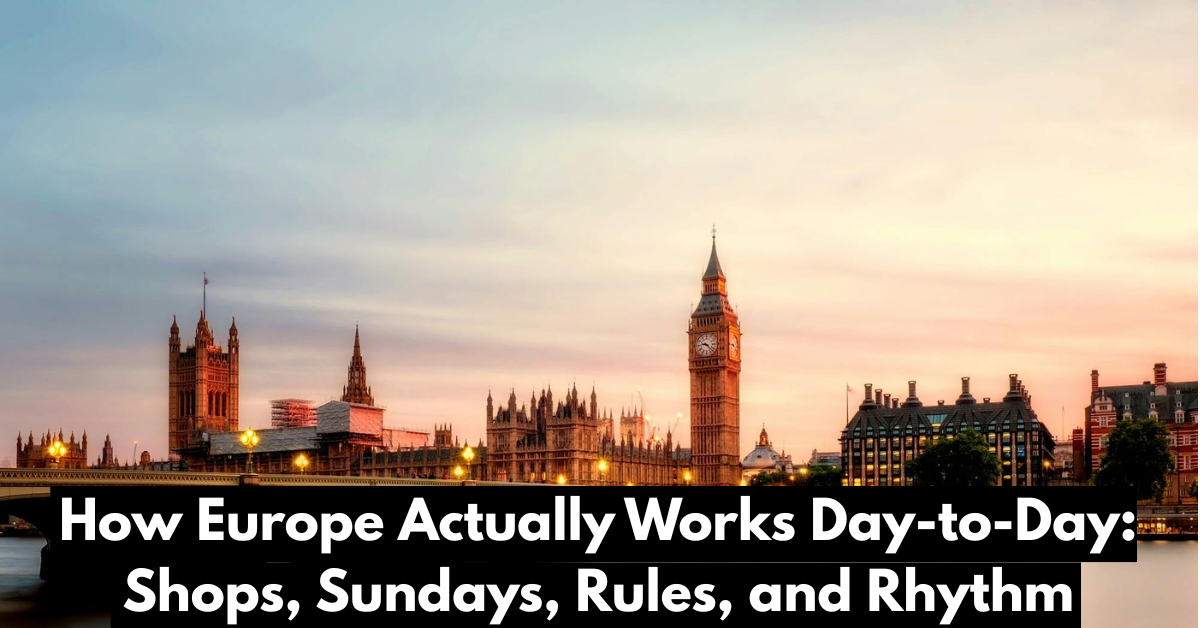
“The streets of Europe are a tourist’s paradise—cobblestone streets, historic buildings that are centuries old, and food so good it’s almost criminal. But the first thing any newbie tourist will tell you is, ‘You know what would be even better? If all the businesses were actually open
Europe is no more chaotic than other places, it just has its own tempo. Once you realize how things work in this country, everything falls into place: shopping, Sundays, breaks, rules, and the pulse of every country.
Let’s discuss the true & everyday experience of living in Europe that won’t be covered in that guide you’re purchasing.
- Shops: Not Always Open, But Always Thoughtful
Europeans love efficiency – but definitely not in the “open 24/7” American way.
Typical Hours: Small shops: 9 AM–1 PM, then a break for lunch, then 3-6 PM.
Supermarkets: It varies, but a common range is 8 AM-8 PM.
Why it matters: Don’t make a final gift purchase at 2 PM and expect a local bakery to be open.
Pro tip: Your best option when you need to get late-night necessities is to check big chain stores or malls. In Italy, Spain, or France, normally closed lunches are considered inviolable. TREAT THEM AS SUCH.
- Sundays Are Sacred – Mostly
Unlike in other places, many European nations consider Sunday a day of rest:
Closed Shops: In Germany, Austria, and some areas of France, there are restrictions on Sunday retail business.
Exceptions: Touristy areas usually have some kind of shops, bakeries, and cafes open. Museums? Usually open but do not rely.
Local Perspective: Sunday outings, markets, and family time are valued. Appreciate that it is an honor and not something that should inconvenience you.
- Meals Are Rituals, Not Just Fuel
A lot goes into having a successful meal at an Italian restaurant, but it all begins with
Italy: Meals are long; dinner can be late (8-10 PM).
Spain: Siestas exist not only in legend – shops in small towns can close for a midday nap.
“France: Don’t rush lunch; locals take their time over several courses.”
Travel hack: Go with the flow. Eating when the locals eat often means eating more fresh food and beating the crowds.
- Public Rules Are Surprisingly Strict – And Weirdly Specific
Europeans honor organization, sometimes going even as far as to make one blink:
Crosswalks: Germany and Switzerland – fines exist for jaywalking.
Noise: In Switzerland and Austria, “quiet hours” are enforced (usually from 10:00 PM to
Trash Separation: Some countries, like Germany, Belgium, and the Netherlands, could not be more serious about recycling. Disregarding this could be worth a side eye.
To find out what those are is not only about staying out of trouble with a fine: it is about acting like a local and not a foreigner when you are traveling.
- Transportation: Efficient, But Not Always Obvious
The public transport systems are normally of a high standard, but there are some differences in rules
Validation: Trains, buses might validate your ticket; otherwise, you might receive heavy penalties.
Schedules: Saturday and Sunday schedules vary. There is less traffic on Sunday, and rural buses may operate only few times daily.
Metro Culture: A Paris or a Rome: the doors to the metro will not open automatically — a push will help.
- Social Rhythm: Europeans Live With Purpose, Not Panic
And unlike the “always-on” attitude common everywhere else, Europeans appreciate the space between work and leisure time :
Coffee Culture. It seems that Italians and French take short standing coffee breaks.
Siesta and Slow Days Those countries were Siestas & Slow Days: Spain, Greece, Portugal – towns may sleep through the
Nightlife: Late dinners and lively nights are typical of southern Europe.
Adjusting yourself according to this rhythm can improve your travel experience, as it will allow you to appreciate cities at their pace rather than feeling as though you’re lagging behind.
- Useful Insights for Travelers
Sundays and lunchtime planning: Stock up on essentials and pre-book your meals.
Respect rules, or at least be knowledgeable about local regulations: Fining systems exist, and local etiquette is observed.
Embrace the rhythm. Morning is very early, lunch is long, dinner is very late. Just go with it.
Transport Awareness: Validate cards, check weekend timetables, and familiarize yourself with rush-hour times.
Europe isn’t broken, it just moves differently. When you get a feel for its rhythm, you’re ready to explore with confidence, skip past the frustrating moments, and find local culture.
Why It Matters Knowing the rhythm of life in Europe isn’t simply practical – it’s an aspect of culture. It turns your holiday into “tourist confusion” and an experience that allows you to view the city as the locals live it. The appeal of Europe is more than the sights or museums—it’s the ways of the people—habits that are small and orderly and beautiful. And you can now follow along.
If you are feeling lucky and want to randomly decide which Country from Europe to travel to, for your journey, then click here to go to our random European country generator.
Leave a Reply