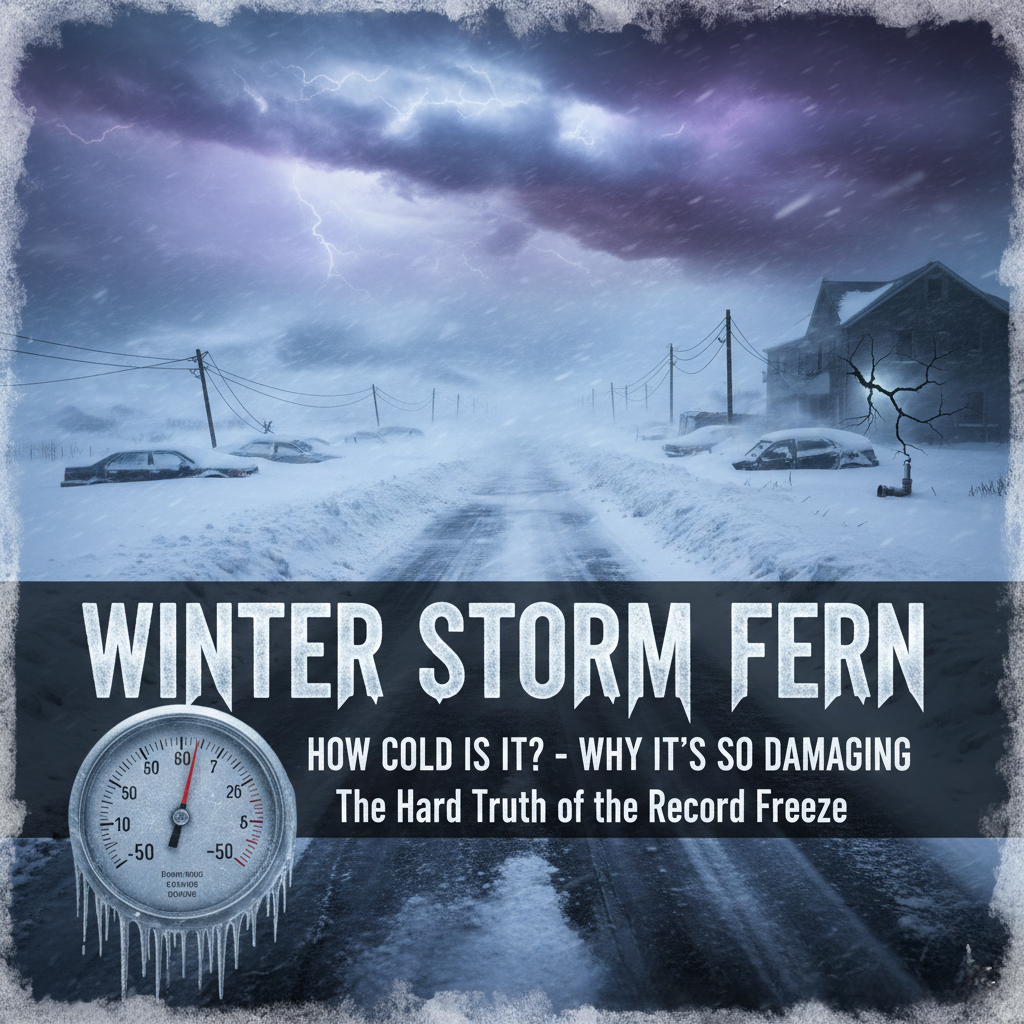
Winter Storm Fern isn’t your average snow event. It’s a historic, sprawling winter system that’s slammed most of the United States, disrupting travel, power systems, and daily life while driving temperatures to levels many regions haven’t seen in years.
This isn’t a weather curiosity — it’s a widespread emergency with real impacts on transportation, infrastructure and safety. Below is a grounded, human-friendly look at how cold it is, how severe the storm’s impacts are, and what it really means for people in its path.
A Storm This Big Is Rare — and Cold
Winter Storm Fern formed around January 22, 2026 and grew into a massive system stretching from the southern Plains right up through New England, with snow, ice, sleet and bitter cold affecting more than 220 million residents.
Some of the extreme stats from meteorological data show just how intense this system has been:
- Snowfall up to ~31 inches in spots like New Mexico.
- Ice accumulations nearing 1 inch in numerous states.
- Wind chills and actual temperatures dropping far below freezing — in some areas well below -40°F.
That means regions normally unaccustomed to severe winter weather — especially across the South — are literally dealing with Arctic-like temperatures in infrastructure and homes not built for it.
Record Cold and Dangerous Conditions
The storm spread dangerously cold air nationwide. In multiple regions, wind chill values reached extreme lows that make frostbite a serious threat in minutes if people are outside without protection.
This isn’t just “cold for a winter day.”
The feels-like temperatures — factoring in wind chill — pushed toward extremes that can incapacitate exposed skin and make breathing cold air uncomfortable and risky, especially for older adults, young children, and people experiencing homelessness.
Emergency services have issued repeated warnings about freezing temperatures extending beyond the active storm period, meaning many communities will remain in severe cold for days.
Snow, Ice, and Road Hazards Everywhere
Fern wasn’t just about cold — it was about how that cold interacted with moisture.
Across multiple zones, the storm brought:
- Heavy snow that blanketed the Northeast and Midwest, with totals above 6–12+ inches common.
- Freezing rain and sleet in the South and mid-Atlantic, creating dangerous ice that coats roads, trees, and power lines.
- Nearly two dozen states under winter storm warnings at one point, stretching across terrain from Texas to Maine.
The combination of heavy snow + ice + deep cold created not just travel chaos but structural and infrastructure failures, as trees and power lines snapped under the weight of ice and crews struggled to keep roads and airports operational.
Power Outages and Infrastructure Failures
One of the most damaging components of this storm has been the impact on the electrical grid.
By January 26, reports showed:
- over 847,000 homes and businesses without power in states from the Ohio Valley to New England.
- Major utilities in Tennessee, North Carolina, Louisiana, Mississippi and other states struggling to restore service.
- Demand for heat and electricity surging while systems buckled under ice and cold rain.
In regions not built for extended freezing conditions — especially the South — the strain on infrastructure is particularly severe. Ice literally brings down power lines, and prolonged cold means utilities have to work under dangerous conditions just to restore service.
Travel Chaos That Felt Historic
Winter Storm Fern has been devastating for travel, too — not just because of snow, but because the cold makes de-icing and airport operations harder and slower.
Recent data shows:
- Tens of thousands of flights cancelled nationwide — including a single city (New York area) accounting for over 1,300 cancellations at major airports.
- Across the U.S., one source listed nearly 19,000 flights cancelled over the storm period — making it one of the worst weekends for air travel in years.
- Ground transit — buses, regional rail and commuter lines — has been interrupted or severely delayed in many urban areas due to ice and snow.
It’s not just flights: roads have been rendered impassable, interstate treacherous, and in one rare case, an avalanche even blocked a Pennsylvania road — something geographically unusual for that region but directly tied to the storm’s intensity.
Lives Lost and Safety Risks
This storm has already proven deadly.
Published reports note at least 30 people have died in storm-related incidents across the U.S. as of late January 26 — many due to exposure, accidents, slips on ice, or traffic collisions caused by the conditions.
Officials have urged people to stay home unless travel is absolutely necessary, especially at night when temperatures plunge further and frostbite becomes a more immediate risk.
Each year, many weather-related deaths occur not just from being outside — but from carbon monoxide poisoning from improperly used heaters or generators, slip-and-fall accidents, or driving in dangerous conditions. Taking cold warnings seriously saves lives.
Why This Storm Is So Broad and Intense
Storm Fern owes its severity to a polar vortex disruption — where a mass of Arctic air spills far south into continental regions that don’t normally experience such extremes. Models show this outbreak cooled surface temperatures dramatically and allowed moisture to interact with that cold air layer over a massive region.
That’s why the storm wasn’t just “a northern system.” It extended into the South — where freezing rain created “catastrophic ice accumulations” on trees and power lines in places like Mississippi, Tennessee, and even Louisiana.
Health Risks From Extreme Cold
Below freezing is one thing.
What’s more dangerous are wind chill conditions and extended exposures. Many health agencies define:
- Frostbite risk in minutes when wind chills dip below -20°F.
- Hypothermia risk in unprotected individuals at temperatures below 32°F if they are wet or not insulated.
With parts of the Midwest and Plains recording below -40°F values with wind chill and prolonged exposure, those conditions aren’t just uncomfortable — they’re life-threatening without basic protective gear or shelter.
Everyday Life in the Deep Freeze
For too many Americans, this has meant:
- Schools switching to remote learning due to unsafe traveling conditions.
- Public transport running on limited schedules.
- Deliveries and daily services delayed or canceled.
- Grocery stores, pharmacies, and heating fuel deliveries stretched thin.
And because power outages compound cold stress, restoring utility services quickly becomes as important as clearing main roads.
Practical Tips for Staying Safe
Whether you’re in an affected area or watching from a distance, these precautions matter:
1. Stay updated
Use official alerts from the National Weather Service or local emergency services.
2. Avoid unnecessary travel
Roads can remain dangerous long after the snowfall ends.
3. Prepare for power disruptions
Have flashlights, charged power banks, and blankets ready.
4. Protect vulnerable populations
Check in on elderly or homebound neighbors.
5. Use heating and generators safely
Carbon monoxide poisoning spikes during outages — use equipment outdoors and ventilated.
What Comes Next?
Winter Storm Fern is likely to linger in terms of cold and travel impacts even after the snow stops. Roads will remain slick. Power grids will be strained. Recovery will take time.
Meteorologists warn that cold air will hang around, making nighttime freezing hazards a continued concern. Cleanup and infrastructure repair will be ongoing challenges — not just for transportation but for daily life.
Conclusion: A Historic, Very Cold Storm With Real Consequences
Winter Storm Fern has proven to be:
- Extremely cold
- Broad in geographic reach
- Severe in disruption of travel and infrastructure
- Life-threatening for those exposed or unprepared
Understanding how cold it has been — and how deep the impacts run — isn’t just about curiosity. It’s about safety, planning, and empathy for communities dealing with this monumental weather event.
For continuing updates and forecasts, always check reliable sources like the National Weather Service and major news outlets.
According to Weather.com, Winter Storm Fern has brought heavy snow, widespread ice, and dangerously cold conditions across more than 34 states in the U.S., affecting over 220 million people and causing travel disruptions, power outages, and hazardous conditions. The National Oceanic and Atmospheric Administration (NOAA) and other meteorologists warn that “catastrophic” ice accumulations are causing infrastructure damage and prolonged travel challenges as freezing temperatures persist.
To know and Learn, on how this could disrupt your travelling plans: Check Here!
Leave a Reply