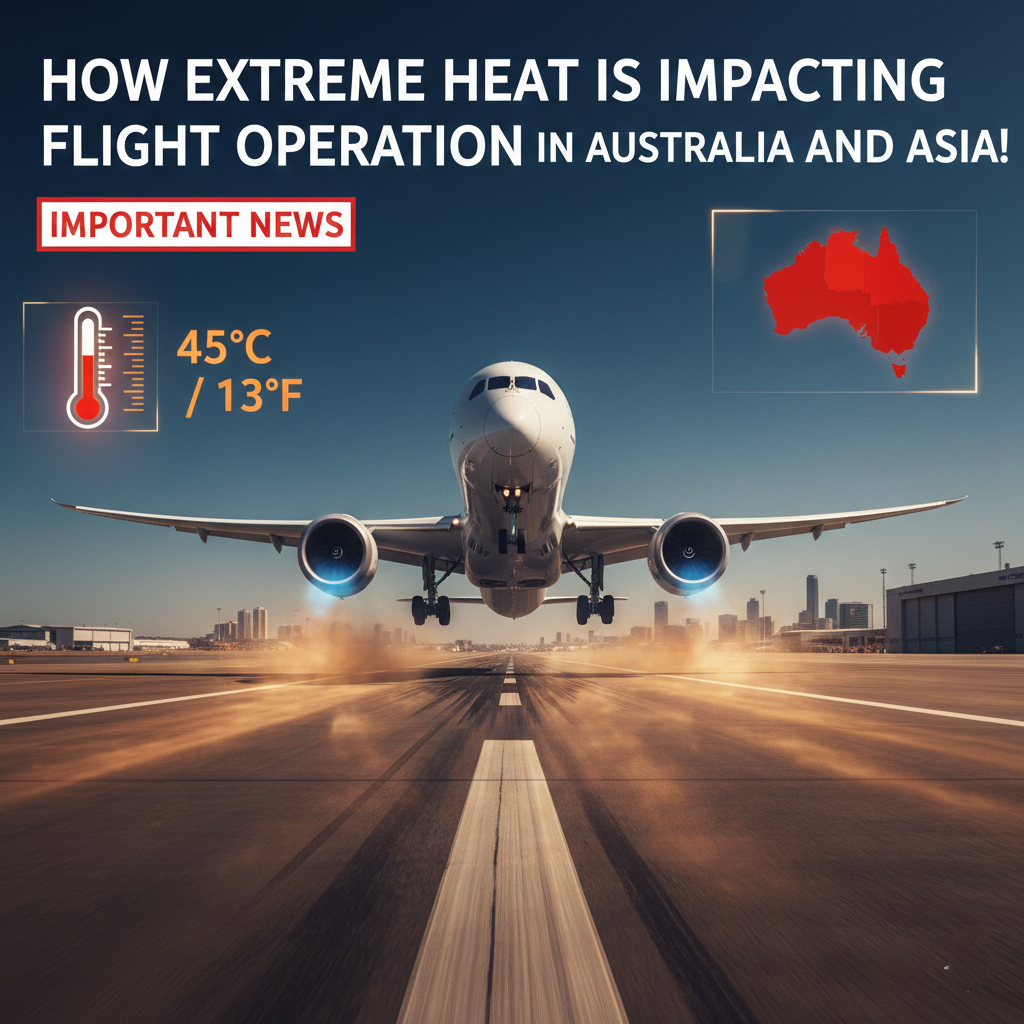
If you’re thinking extreme heat-waves only make people sweat on the beach, think again. Extreme temperatures are now literally reshaping the way airplanes fly, how airports operate, and even when and whether flights can take off or land safely.
From record-breaking heat in southern Australia that’s baked cities and strained infrastructure, to broader warming trends across Asia and the Pacific, heat is becoming a serious variable in global air travel. Let’s unpack how the heat affects aviation physics, airport operations, crew performance, and ultimately your travel plans when you’re flying in and out of these regions.
Record Heat in Australia: A Real Case Study
Australia has been in the global weather spotlight recently for one of its most intense heatwaves in recorded history. Parts of south-eastern Australia baked under temperatures close to 50 °C, with multiple cities and even airports feeling the brunt of sweltering conditions.
These aren’t minor “hot summer days.” They’re historic waves of heat that strain power grids, fuel bushfires, and create conditions that push airport and airline systems to adapt or stall.
Airports in Victoria and other states have seen sustained temperatures well above 40 °C — a tough environment for planes, ground crews, and passengers alike.
Why Extreme Heat Matters for Aviation (Yes, It’s Physics)
The big picture on heat and flight boils down to air density.
Airplanes generate lift by moving air over their wings. When the air is hot, it expands and becomes less dense. That means:
- Less lift at a given speed
- Engines generate slightly less thrust
- Longer runways and higher speeds are needed for takeoff
- Some aircraft reach operational limits sooner
This isn’t speculation. Official climate-aviation assessments note that decreased air density at high temperatures forces planes to require longer takeoff runs and can lead to maximum takeoff weight restrictions — meaning less cargo, fewer passengers, or reduced fuel load.
In extreme heat, pilots and dispatchers calculate performance carefully. If a runway is too short for a fully loaded aircraft in thin hot air, the airline may delay the flight until cooler temperatures, reduce payload, or in rare cases, cancel the departure. It’s not just discomfort or inconvenience — it’s a safety constraint built into flight operations.
Airport Operations Aren’t Built for Ovens
It’s not only planes that feel the heat. Airport infrastructure — runways, taxiways, ground equipment, even air traffic control towers — isn’t immune to scorching weather.
When tarmac surface temperatures climb, runways can soften or even warp under intense heat, creating safety and maintenance concerns. Ground crews working outdoors face risks of heat exhaustion or heat stress, which forces slower operational tempos or additional breaks for worker safety — a necessary disruption to timely airport functioning.
Air traffic control facilities and terminals also have to work harder: cooling systems run up energy demand, and energy grids under strain from heatwaves (as seen in Australia) can compound delays.
Airline Adjustments: Flight Delays, Weight Limits, and Afternoon Cancellations
Airlines don’t want to delay or reduce services — it’s costly. But extreme heat fundamentally changes how aircraft perform:
- Reduced lift means slower takeoff acceleration
- Engine efficiency dips in thinner air
- Aircraft may fly with lower payloads for safety margins
- Some flights are shifted to cooler hours of day
These decisions are safety driven, not cosmetic. They affect scheduling, costs, and reliability. Even if an aircraft is technically capable of flying in high heat, the performance margins narrow, meaning airlines may choose to wait for cooler conditions or make operational adjustments.
In other regions with frequent heat spikes, similar patterns emerge. For example, flights out of airports with high ambient temperatures often experience delays or reduced payload limits because the hot air reduces lift, forcing planners to either lighten the aircraft or postpone departures until evening or early morning when temperatures drop.
Asia’s Heat Trends: Not Just Australia
While Australia’s current heatwave is headline news, parts of Asia are also warming faster than the global average, experiencing more frequent and intense heatwaves that can extend into aviation operations and safety considerations.
Extreme heat has broad implications for airports and airline schedules beyond Australia. In many parts of Southeast Asia and South Asia, high temperatures are already part of the seasonal climate, and rising heat trends are only making operations more complex in countries with dense air traffic and high summer heat.
Though heat’s impact on flights in Asia hasn’t matched the intensity we’re seeing in Australia yet, the underlying climatic trends point to a future where heat will be a regular factor in aviation planning.
Passenger Experience: Heat Inside Terminals and on Tarmacs
The effect of heat isn’t limited to physics and operations. Passengers feel it too.
Planes parked on tarmacs under extreme sun can trap heat, sometimes pushing cabin temperatures above safe comfort levels if ground cooling systems aren’t sufficient. Heat-related provisioning like keeping jet bridges cool, accommodating heat-delay holds, and managing cabin comfort becomes part of the logistical equation on hot days.
When ground air conditioning isn’t available or delayed aircraft sit in the sun, passengers can experience prolonged discomfort — not just inconvenience. Airlines and airports increasingly need to adapt ground services to provide safe, cool zones during heat surges.
What This Means for Travelers to Australia and Asia
Here’s what savvy travelers should consider when flying into or out of heat-prone regions:
Book Flexible Flights:
If your schedule allows, choose departure and arrival times in the cooler parts of the day (early morning or late evening), when air density is more favorable.
Monitor Weather and Airport Status:
Extreme heat alerts, airport advisories, or airline communications can signal potential operational constraints before you get to the airport.
Expect Possible Weight Restrictions:
Airlines may limit baggage or cargo capacity to ensure safe takeoff performance — which could affect how many checked bags are allowed.
Stay Hydrated and Prepared:
Long waits in high temperatures, whether in terminals or boarding areas, make hydration, timing, and personal comfort planning more important than ever.
The Future of Heat and Aviation: Not Just a One-Off
Experts and climate assessments confirm that rising global temperatures are likely to increase the frequency and intensity of extreme heat events, adding to a spectrum of weather challenges already affecting aviation — from winter storms to tropical storms and beyond.
For travelers, that means weather will increasingly be a factor not just in whether you travel, but how you plan, when you depart, and how much flexibility you build into your schedule.
And as heatwaves continue to break records — such as near-50 °C readings recorded in parts of southern Australia — it’s worth remembering that heat isn’t just a national headline — it’s a factor shaping real flight operations on the ground and in the air.
Final Thought
Heat is invisible, but its effects on aviation are very real. What looks like a blue-sky forecast on your weather app can translate into operational limits, flight delays, or payload adjustments long before you ever board the plane.
Travelers heading to or through heat-affected regions — from Australia to increasingly warm parts of Asia — should plan with not just temperatures, but aviation physics and airport realities in mind.
Because in the age of record heatwaves, the weather isn’t just part of your trip — it’s part of your flight plan.
According to Travel and Tour World, Australia is currently facing a blistering heatwave with temperatures soaring above 40 °C across multiple states including Victoria, New South Wales, Tasmania, and South Australia — conditions that not only impact daily life but also pose challenges for outdoor infrastructure and travel operations.
Feeling inspired to plan your next adventure, but can’t decide where to go? Let our Random European Country Generator do the work for you! Click the link, spin the wheel, and discover a new destination you might never have considered — perfect for spontaneous travelers or anyone looking to break out of the planning rut.
Leave a Reply