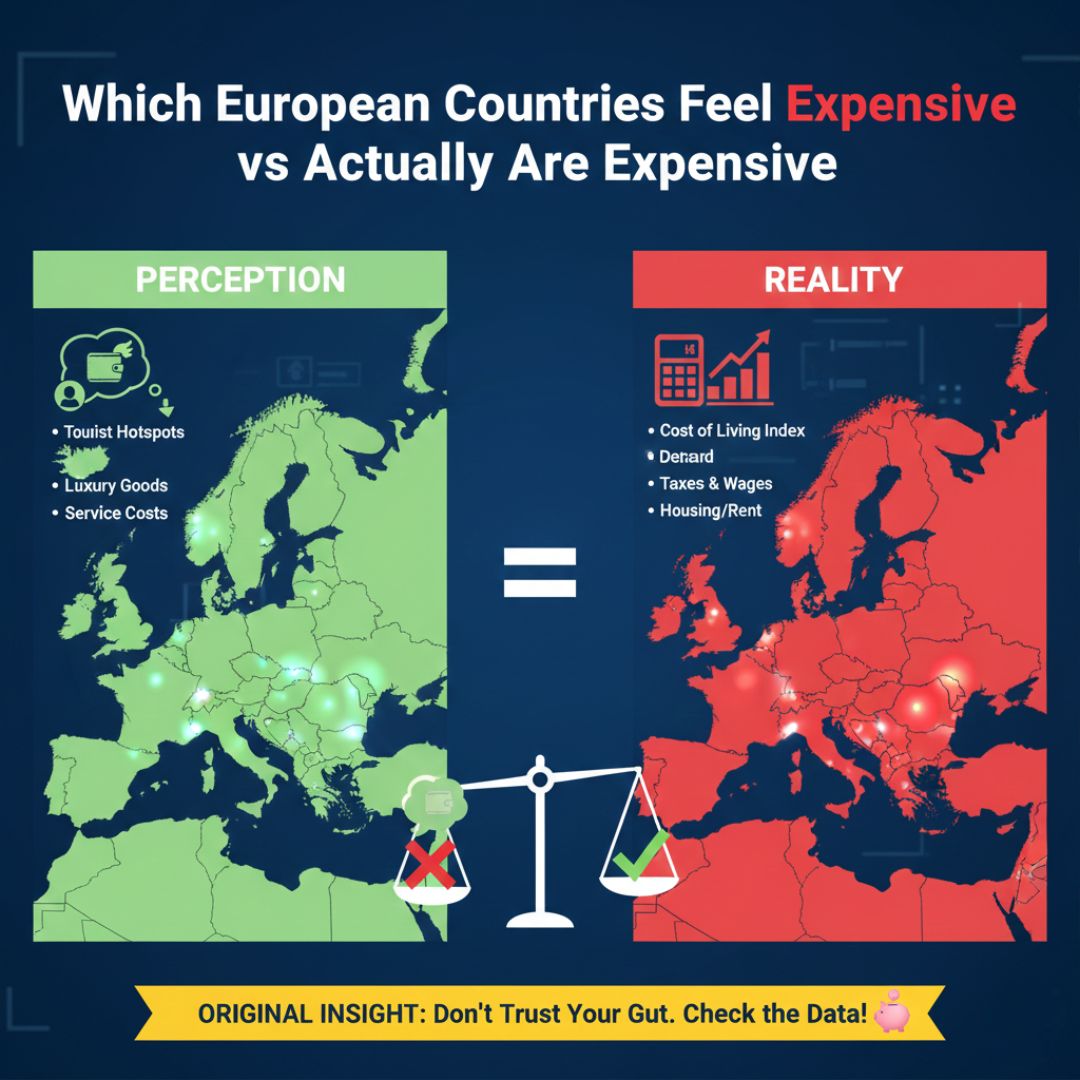
Europe has this psychological pricing trap built into it. You step off the plane in, say, Paris or Zurich, and your brain screams: “We’re broke now!” But sometimes, that panicked feeling isn’t matched by reality. Conversely, you might stroll through Eastern Europe thinking, “Oh, it’s fine!”—until your dinner bill quietly doubles your travel budget.
Let’s break down the European countries that feel expensive vs the ones that are genuinely expensive, so you can plan smarter, not just cheaper.
Why Some Places Feel Expensive
Before we talk numbers, it’s worth unpacking why your brain thinks some countries cost more than they do.
- First Impressions and Airports
Landing at a swanky hub like Zurich, Oslo, or London Heathrow instantly signals money. The ride from the airport to downtown costs €50–€100, taxis are pricey, and the first coffee you buy sets the tone. The “expensive vibe” starts before you even see the city. - Currency Shock
Even when the euro or Swiss franc is strong, your home currency makes everything look bigger than it is. Paying €8 for a latte feels worse than $8 if you’re used to cheaper standards. - Tourist Zones
Central Paris, Rome’s Colosseum area, or Prague’s Old Town square all mark up prices. That “feels expensive” sticker isn’t the country—it’s the tourist zone.
Countries That Feel Expensive… But Aren’t That Bad
1. Portugal
Lisbon and Porto can feel pricey compared to your budget in Southeast Asia, but relative to Western Europe? Surprisingly affordable.
- Meals: €10–€15 for a main course at a nice restaurant.
- Public transport: €1.50–€2 per tram/bus ride.
- Accommodations: Boutique hotels for €70–€100/night.
Why it feels expensive: Cobblestone streets, rooftop cafes, and postcard-perfect tram rides give the illusion of luxury.
Pro tip: Avoid tourist traps in Alfama or Belém during peak times; local eateries and neighborhoods give better prices without sacrificing the experience.
2. Italy (Rome, Florence, Venice)
Italy’s iconic cities scream “expensive” the second you see a gelato for €5.
- Meals: Mid-range restaurants €15–€25. Street food or small trattorias €5–€10.
- Museums: Entry €10–€20 for major sites.
- Accommodation: €80–€120/night for 3-star hotels in city centers.
Why it feels expensive: Everywhere is photogenic, and every street corner looks like a postcard. Also, Venice and Florence are tourist traps where prices spike.
Reality check: If you step just one neighborhood over from the main piazzas, you can eat, stay, and drink for less than your instincts expect.
3. Spain (Barcelona, Madrid)
Spain can feel high-budget if you stick to the tourist hotspots, but with savvy choices:
- Meals: Tapas €3–€5 each, full meals €10–€15 in local eateries.
- Transport: Metro passes €10–€20/week.
- Hotels: €60–€100/night for standard city hotels.
Why it feels expensive: Tourist zones like Las Ramblas or Plaza Mayor give sticker shock.
Reality: Venture to neighborhoods locals frequent; prices drop, and authenticity rises.
Countries That Are Actually Expensive
1. Switzerland
Switzerland is the real “expensive” country, no illusion needed.
- Meals: Restaurant mains €25–€40, coffee €5–€6.
- Transport: Train passes are superb but pricey (€70/day for unlimited travel in many regions).
- Accommodation: Hotels €150–€250/night, even in small towns.
Why it’s genuinely costly: Strong currency, high wages, and strict regulations make every product, service, and hotel stay pricey.
Travel tip: Use Airbnb or stay outside major cities. Buy groceries and cook meals to save. The scenery? Worth every Swiss franc.
2. Norway
Norway earns its “high cost” label honestly.
- Meals: €25–€35 at restaurants; €10–€15 for a simple sandwich or takeaway.
- Transport: Trains and buses are reliable but expensive (€50–€100 for a medium-length trip).
- Hotels: €120–€250/night in Oslo, Bergen, or Tromsø.
Reality: Norway’s natural beauty is unparalleled, but budget travelers will feel the pinch. Plan carefully, consider hostels, and embrace self-catering.
3. Iceland
Iceland is gorgeous but expensive in every way.
- Meals: €20–€35 for an average restaurant meal.
- Fuel: Gas is high, so driving your own car can add up fast.
- Accommodation: €150–€300/night for mid-range hotels.
Travel tip: Many travelers save by camping or renting apartments with kitchens. Gas stations in remote areas also jack up prices.
The Middle Ground: Feels Expensive and Actually Is
France (Paris)
Paris is tricky — sometimes a city of illusion, sometimes real sticker shock.
- Meals: €15–€30 at casual restaurants.
- Transport: Metro passes €22/week.
- Hotels: €120–€200/night in central districts.
Why it feels expensive: Cafés, iconic sights, and the Eiffel Tower effect make you feel like you’re living in luxury.
Reality check: Outside central Paris, prices drop significantly — but central Paris is always going to hurt your wallet a bit.
United Kingdom (London)
London can feel like your wallet is under constant assault.
- Meals: £15–£25 per main course.
- Transport: £20–£35/week for an Oyster card.
- Hotels: £100–£200/night.
Why it feels expensive: Strong currency + iconic landmarks + high local wages = unavoidable costs.
Reality: Budget hotels, hostels, and side neighborhoods (like Hackney or Southbank) bring prices closer to reality.
Factors That Skew Perception vs Reality
- Tourist Density – Crowded hotspots inflate “feelings of expense.”
- Currency Conversion Anxiety – Your brain hates math, especially when currency fluctuates.
- Media and Instagram – Paris cafés or Venice gondolas scream luxury in pictures, making even cheap meals feel pricey.
- Timing – Holidays and festivals spike real prices, but they also heighten perceived expense in unexpected places.
Budget Strategies for Both Worlds
- Off-Hours & Neighborhoods
Ditch the main tourist streets — real locals eat, drink, and stay for less. - Advance Bookings
Flights, trains, and accommodations booked 2–6 months ahead usually beat last-minute decisions. - Self-Catering
Even in pricey countries like Switzerland or Norway, groceries + kitchen = massive savings. - Public Transport Over Taxis
Europe’s trains and buses are world-class and often cheaper than Uber or taxis. - Local Insights
Tap into blogs, forums, and Instagram stories from locals — they know where the hidden affordable spots are.
Quick Country Cheat Sheet
| Country | Feels Expensive? | Actually Expensive? | Travel Tip |
|---|---|---|---|
| Portugal | Yes | No | Stick to local neighborhoods for meals. |
| Italy | Yes | No | Avoid main piazzas for restaurants. |
| Spain | Yes | No | Tapas bars outside tourist zones. |
| France (Paris) | Yes | Yes/No | Stay outside central Paris. |
| UK (London) | Yes | Yes | Use public transport, side neighborhoods. |
| Switzerland | No | Yes | Cook meals, stay outside city centers. |
| Norway | No | Yes | Embrace self-catering and budget hostels. |
| Iceland | No | Yes | Camp or rent apartments with kitchens. |
Final Thoughts about these European Countries
Europe is expensive if you let perception dictate your decisions. But with some data-backed planning, the same cities that feel expensive can be surprisingly affordable. Conversely, some “hidden gems” will bite your budget if you underestimate real-world costs.
The key is research + timing + local insight. Know the difference between “feels expensive” and “actually expensive,” and your trip won’t just be more affordable — it’ll feel smarter and richer, too.
Traveling smart in Europe isn’t about skipping Paris or Switzerland — it’s about knowing when, where, and how to spend. That’s the real insider trick.
If you’re feeling indecisive about which country to explore next, take the guesswork out of the equation. Try our Random European Country Generator to discover a new destination instantly and start planning your smarter, more budget-friendly European adventure today.
Leave a Reply