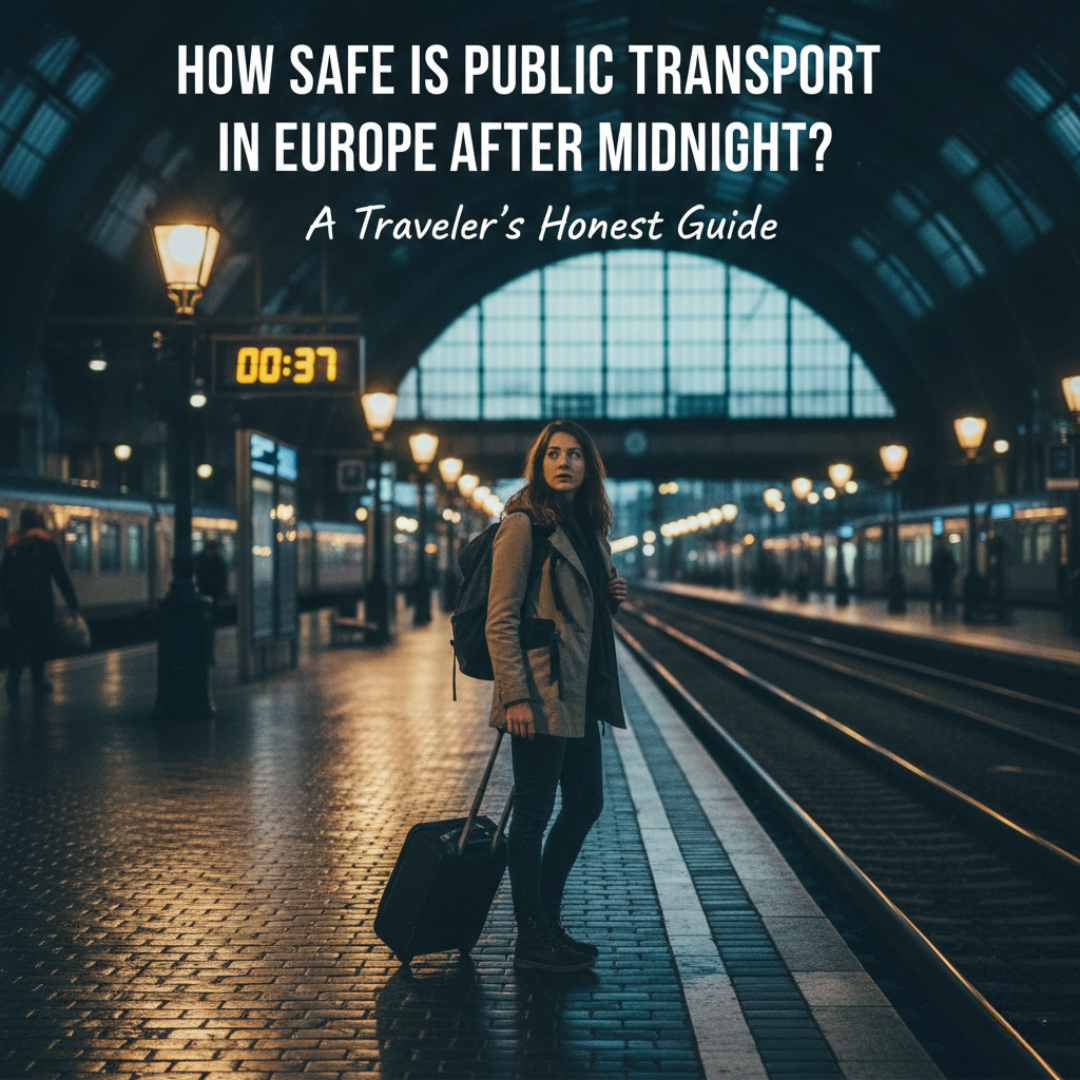
Late nights in Europe are magical. The streets glow with amber lights, cafés hum with laughter, and city squares echo with footsteps that seem almost cinematic. But there’s that nagging thought: “Can I actually take the train or metro at this hour without ending up in trouble?”
Let’s face it—safety concerns on late-night public transport are a common anxiety for travelers. Some cities are perfectly fine; others require planning, vigilance, and sometimes creative thinking. This guide will break down what to expect, country by country, with practical tips so you can ride like a local (and stay safe).
Why Travelers Worry About Late-Night Transport
Before we look at the data, it’s worth understanding why your brain starts spiraling after 11 PM:
- Reduced Frequency – Trains and buses run less often, which can leave you waiting in quiet or empty stations. Empty doesn’t equal unsafe—but it feels that way.
- Tourist Blind Spots – Tourists don’t know which neighborhoods are safe at night. A street that looks charming at 5 PM may feel sketchy at midnight.
- Media and Stories – Everyone has a horror story about being pickpocketed or confronted on a late train, even if the odds are low. Fear spreads faster than statistics.
Northern Europe: Calm and Reliable
1. Sweden (Stockholm, Gothenburg, Malmö)
- Late-night frequency: Most metro lines run until 1 AM, with night buses covering main routes until 5 AM.
- Safety record: Low crime rates on public transport, with occasional pickpocketing in tourist areas.
- Traveler tip: Use SL app for real-time schedules. Stick to well-lit stations if traveling solo, but in general, Stockholm and Gothenburg are extremely safe.
Reality check: If you’re used to late-night subways in the U.S., Stockholm’s system feels quiet, clean, and surprisingly secure.
2. Norway (Oslo, Bergen)
- Late-night frequency: Metro and buses taper off around midnight. Some smaller towns have limited night services.
- Safety record: Violent incidents are rare; the main issue is isolation at less busy stops.
- Traveler tip: Use rideshare apps as backup if traveling from suburban stops. Stick to city centers if using late-night public transport.
Pro tip: Norway’s culture emphasizes civility; people keep to themselves, which usually means no trouble—but solitude can be intimidating.
Western Europe: Crowded but Generally Secure
3. Germany (Berlin, Munich, Hamburg)
- Late-night frequency: Metro/subway (U-Bahn) and suburban trains (S-Bahn) run until around 1–2 AM, with night buses taking over. Weekend night trains operate throughout the night in major cities.
- Safety record: Violent incidents are uncommon, but pickpocketing can spike around clubs and bars.
- Traveler tip: Stick to central lines and avoid isolated stations. Germany’s public transport is known for efficiency and security, but awareness is key.
4. France (Paris)
- Late-night frequency: Metro closes ~12:30 AM, night buses (Noctilien) run until ~5 AM.
- Safety record: Some Parisian metro lines, especially on the outskirts, have higher petty crime rates.
- Traveler tip: Avoid empty cars late at night; sit near groups of locals, or travel in pairs when possible.
Reality check: Paris is visually stunning at night, but its metro is busiest in touristy central lines. Outside those areas, vigilance matters more.
5. Netherlands (Amsterdam)
- Late-night frequency: Metro and tram services reduce after midnight; night buses cover main routes.
- Safety record: Low violent crime. Pickpocketing in crowded areas remains the primary concern.
- Traveler tip: Amsterdam’s compact city center makes walking safe in most areas—but if you’re traveling alone, night buses provide extra security.
Southern Europe: Varying Levels of Safety
6. Spain (Madrid, Barcelona)
- Late-night frequency: Metro runs until ~1:30–2 AM; night buses cover main routes afterward.
- Safety record: Pickpocketing in tourist areas is common, especially around La Rambla or Gran Via. Violent incidents are rare.
- Traveler tip: Keep wallets in front pockets, and avoid empty trains late at night. Bars often have trams or buses nearby for safe rides home.
7. Italy (Rome, Milan, Florence)
- Late-night frequency: Most metro lines stop by midnight; buses run until ~2 AM in central areas.
- Safety record: Pickpocketing is the main risk, often near stations. Some suburban stops can feel sketchy late at night.
- Traveler tip: Pre-plan routes with Google Maps or local apps; avoid empty side streets after leaving the station.
Reality: Italy’s charm can make you wander off course; staying on main lines reduces risk significantly.
8. Greece (Athens)
- Late-night frequency: Metro stops around midnight; buses run late in major areas.
- Safety record: Pickpocketing and petty theft are more common than violent crime.
- Traveler tip: Stay alert in crowded stations; traveling in small groups is ideal.
Eastern Europe: Affordable but Requires Awareness
9. Czech Republic (Prague)
- Late-night frequency: Metro stops around midnight; night trams and buses cover central routes.
- Safety record: Low violent crime, occasional scams and pickpocketing near tourist zones.
- Traveler tip: Avoid deserted stations late at night; sit near locals for extra security.
10. Poland (Warsaw, Kraków)
- Late-night frequency: Night buses and trams replace most daytime lines after midnight.
- Safety record: Generally safe; petty crime more common than violence.
- Traveler tip: Pay attention to official ticket inspectors; avoid unofficial taxis at night.
Practical Safety Tips for Late-Night Public Transport
- Plan Ahead – Check schedules before leaving the bar, restaurant, or event. Most European cities have reliable apps showing real-time departures.
- Avoid Empty Cars – Stick near other passengers. Crowds deter petty criminals.
- Secure Belongings – Keep wallets in front pockets, backpacks in front, and phone within reach.
- Use Official Services – Skip unlicensed taxis. Stick to public transport or verified rideshare services.
- Travel in Groups When Possible – A buddy system increases both safety and confidence.
- Stay in Well-Lit Areas – Especially in peripheral stations.
- Trust Your Instincts – If a situation feels off, move to another car, station, or call a rideshare.
The Surprising Truth
Europe isn’t magically safer after midnight, but the perception gap is bigger than the reality. Violent crime is rare in most countries; most safety issues revolve around petty theft and occasional scams.
Some cities like Zurich, Stockholm, Oslo, or Amsterdam can feel safer than your home city at night. Other places, like Paris outskirts or certain Italian suburbs, require more situational awareness—but nothing extreme if you follow common-sense guidelines.
Key takeaway: Late-night public transport is mostly safe, but awareness, planning, and a little caution make it a stress-free experience. The difference between “safe” and “anxious” travel is often just preparation.
Bottom Line
Taking the metro in Berlin at 1 AM? Usually fine. Riding the night bus in Rome after midnight? A little awareness goes a long way. Europe after dark is not a warzone, but it’s also not completely risk-free. Understanding which cities have the best night infrastructure, staying in well-populated areas, and keeping your valuables secure will turn anxiety into confidence.
After all, late-night adventures—whether it’s wandering Paris streets or catching a midnight tram in Amsterdam—are part of what makes European travel unforgettable. Knowing how to do it safely just makes the memories sweeter.
👉 European Commission – Transport and Tourism — provides official information on how the EU works to make public transport safe, accessible, and reliable across Europe, including rail, bus, and urban transit systems.
And if you’re stuck choosing where to go next — let chance help.
Use our Random European Country Generator to discover a destination you might never have picked… and maybe avoid a few tourist traps along the way.
Leave a Reply