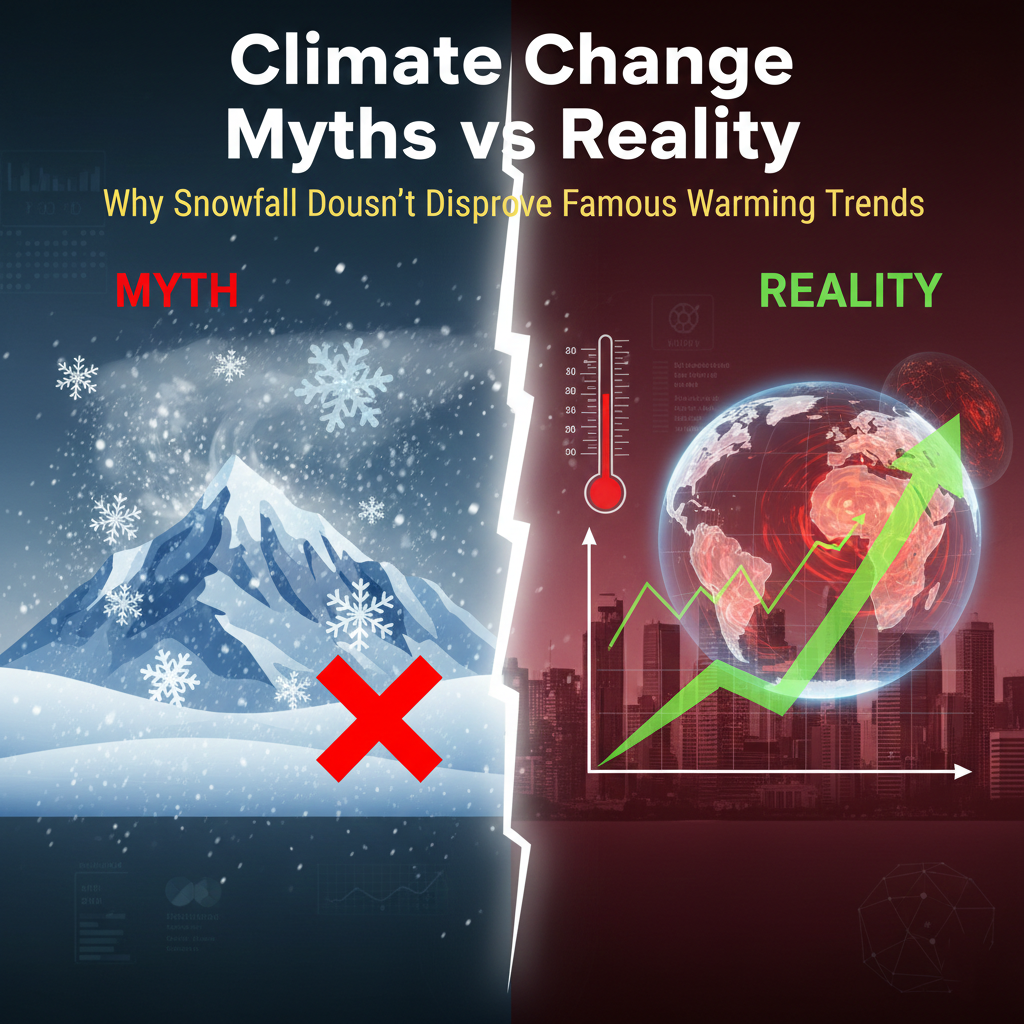
Every time a blizzard shuts down an airport or a winter storm makes the evening news, the comment sections explode: “Global warming isn’t real — look at all this snow!”
It’s a tempting argument. Snow is cold. Snow is real. Therefore, the planet can’t be warming, right? Not so fast. That’s the kind of reasoning climate scientists call cherry-picking: using isolated events to dismiss a long-term trend.
Snowfall, freezing temperatures, and extreme winters are not contradictions to climate change. In fact, they are often linked to it in ways most people don’t realize.
Let’s unpack the myths, explore the science, and connect it to what travelers need to know in a warming, unpredictable world.
Myth 1: “If it’s snowing, global warming is fake”
It’s an easy trap. Snow is tangible; climate change is abstract. But here’s the catch: global warming doesn’t mean no winter, no snow, or no cold days.
According to Time, while North America experiences heavy snowstorms, Australia has simultaneously been battling record heat. Climate change doesn’t flatten weather patterns; it amplifies extremes.
In fact, warming Arctic temperatures can disrupt the jet stream, which can lead to cold air outbreaks in mid-latitudes, creating extreme snowstorms even as the planet warms overall.
Traveler’s takeaway: Don’t cancel a winter trip to the Alps just because someone told you snow means climate change is a hoax. Extreme snow events are consistent with modern climate trends.
Myth 2: “Snowstorms prove that humans aren’t affecting the climate”
Let’s take Winter Storm Fern and the emerging Gianna system as examples. Tens of thousands of canceled flights, record snowfall, and power outages have made headlines. But these storms don’t exist in a vacuum.
Scientists explain that warmer oceans and altered atmospheric currents increase the intensity of storms. So while the storms themselves are weather events, the frequency and severity are linked to climate trends.
Climate change doesn’t prevent snow—it makes extreme weather events more unpredictable and sometimes more intense.
Traveler’s tip: Check airline policies and consider travel insurance during winter seasons. Volatility is higher than it used to be.
Myth 3: “Cold winters in my region mean the Earth isn’t warming”
One region’s experience doesn’t define the planet. Global warming is measured by average temperatures over decades across the globe, not by a single storm or winter.
For example, Europe’s storms Leonardo and other winter floods devastated parts of Portugal and Spain while other areas remained unusually mild. Meanwhile, Australia hit record temperatures, and other Southern Hemisphere regions experienced droughts.
The lesson: Weather is local, climate is global. Snow in your backyard doesn’t counteract heat waves in the tropics.
Traveler’s insight: Understanding regional climate trends helps in planning trips. Expect extremes, not consistency.
Myth 4: “Snow proves winters are getting colder”
Actually, some research indicates the opposite: winters are warming in many regions. The snow you see may be more sporadic, heavy, and localized, rather than part of a long, stable cold season.
A warmer atmosphere holds more moisture, which can fuel intense snowstorms. That means a blizzard today could be part of a warming trend that produces more extreme events, not less.
Example: Snowstorm reports from the U.S. Midwest show higher snowfall totals in some areas, but average winter temperatures have still risen over the last 50 years.
Myth 5: “If we’re freezing, climate change must be fake”
The planet is warming unevenly. Arctic regions are heating twice as fast as mid-latitudes, and disruptions to polar air masses often trigger colder winters elsewhere.
In other words, extreme cold in one place doesn’t invalidate global temperature records. It actually aligns with scientific expectations of a disrupted jet stream caused by Arctic warming.
Traveler’s note: Expect surprises in both hot and cold destinations. Being flexible with travel plans and aware of extreme weather forecasts is essential.
Real-World Examples: Snow and Heat Side by Side
- North America: Massive snowstorms like Fern disrupted tens of thousands of flights.
- Australia: Record heat waves broke temperature records at the same time.
- Europe: Storm Leonardo caused deadly floods in Portugal and Spain while parts of Eastern Europe saw milder winters.
These extremes illustrate a pattern: more volatile weather, not a simple cold/warm dichotomy.
What This Means for Travel
- Expect unpredictability: Storms, floods, heat waves — all can disrupt itineraries.
- Check multiple sources: Local alerts, airlines, hotel websites, and apps like The Weather Channel or NWS for real-time updates.
- Book flexible options: Refundable flights, adjustable hotel reservations, and travel insurance are no longer “nice to have.”
- Plan for extremes: Pack for both warm and cold surprises, especially if traveling across hemispheres.
Climate Change Is Complex, But Avoiding Myths Helps Everyone
Understanding that snow doesn’t disprove warming allows travelers, educators, and casual readers to make informed decisions instead of reacting to fear or misinformation.
For travelers, it’s not just an intellectual exercise — it’s practical: avoiding stranded flights, choosing safe destinations, and timing trips wisely.
Final Thought
The key takeaway? Weather ≠ climate. Snow, cold snaps, and blizzards are pieces of the larger global puzzle. Ignoring this reality can lead to canceled trips, inflated costs, or just plain frustration.
Instead, embrace the complexity. Stay informed, stay flexible, and travel smart — even in a world where storms and heat waves coexist like never before.
If you want to explore your next adventure without overthinking the destination, try our Random European Country Generator and let chance pick your journey. Sometimes the best trips are the ones you didn’t plan down to the last snowflake.
Leave a Reply